
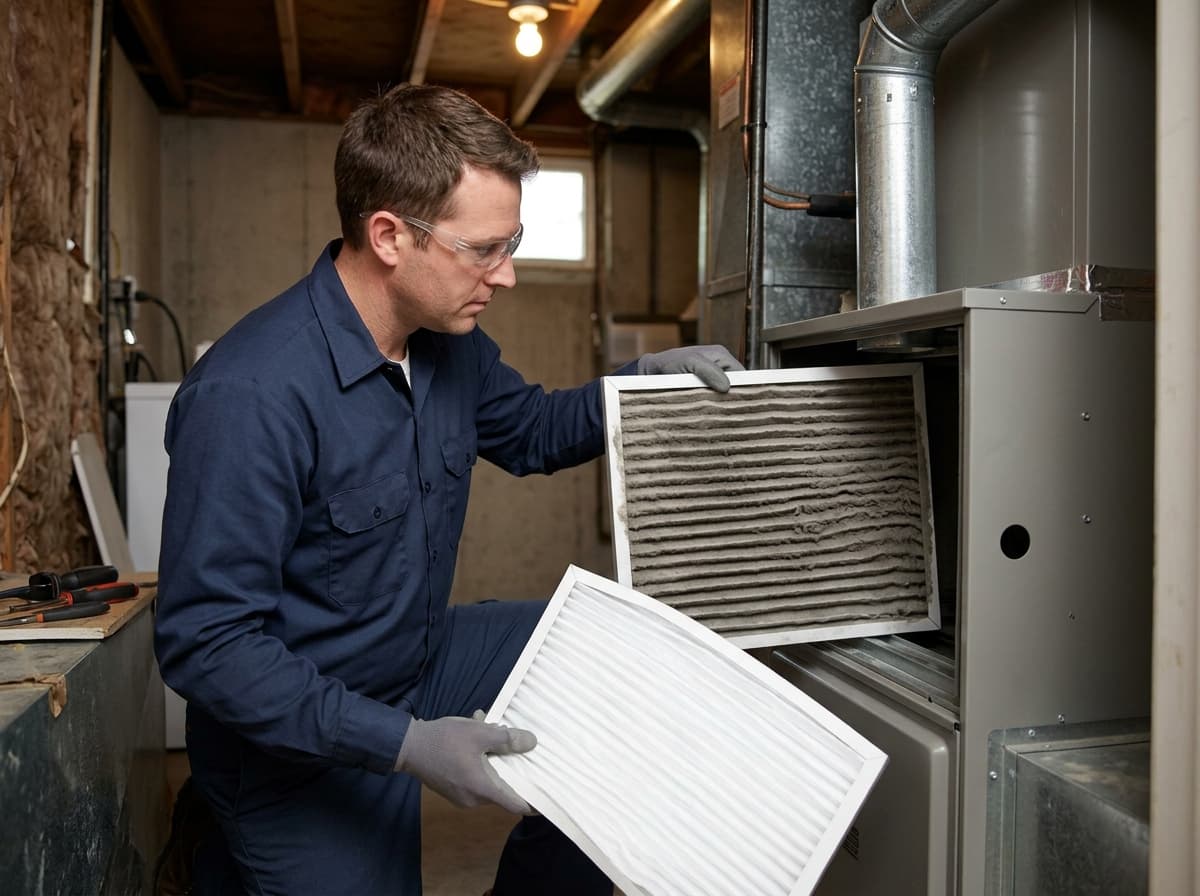
The national advice says every 90 days. In St. George's high-desert dust, that's far too long — most homes here need a fresh filter every 30. Here's why, and how to build the habit.
If you've read the sticker on a new air filter, you've seen the standard advice: change it every 90 days. That number was written for average homes in average climates — and Southern Utah is neither. Between the fine red dust that blankets everything out here and an AC that runs half the year, most St. George homes need a fresh filter far more often than the box suggests. Here's how to think about it.
Why the Desert Changes the Math
St. George sits in a high-desert basin where wind-blown dust and sand are simply part of the environment. That grit doesn't stay outside — it works its way into your home and gets pulled straight into your return air, where the filter has to catch it. A filter that might last three months in a humid, dust-free climate can clog in a matter of weeks here.
On top of the dust, our long cooling season means the system is moving air through that filter almost constantly from spring through fall. More runtime means more air pulled across the filter, which means it loads up with debris much faster than a filter in a milder climate ever would.
The 30-Day Rule (and When to Go Shorter)
For most Southern Utah homes, every 30 days is the right baseline during cooling season. Check it monthly, and don't be surprised if it looks gray and packed well before the box's 90-day mark.
Certain households should shorten that interval even further. If you have shedding pets, someone with allergies or asthma, or you live near open desert or an active construction area, plan on checking every two to three weeks. Whatever you do, never let a filter go past 90 days — by then it's almost certainly working against you.
How to Check a Filter in 30 Seconds
Pull the filter out and hold it up to a light. If you can see light passing through the pleats, it still has life left. If the surface is coated gray and the light barely comes through, it's done. You don't need a schedule to tell you a filter is spent — your eyes will.
While it's out, note the size printed on the cardboard frame and the direction of the airflow arrow. The arrow should always point toward the blower, in the direction air is moving. Slotting a filter in backward reduces how well it works.
What MERV Rating Should You Choose?
MERV measures how fine a filter's filtration is. For most homes, a filter in the MERV 8 to 11 range is the sweet spot — it captures dust, pollen, and pet dander without choking off airflow. That balance matters here, because a filter that's too restrictive makes your system work harder in the exact months it's already working hardest.
It's tempting to grab the highest-MERV filter on the shelf thinking more is better, but a very dense filter on a system that wasn't designed for it can starve the blower for air. If someone in the home has serious respiratory needs and you want higher filtration, have a tech confirm your system can handle it first.
What a Clogged Filter Actually Costs You
A packed filter chokes the airflow your system depends on. The blower motor strains harder to pull air through, which drives up your energy bill and shortens the motor's life. At the same time, restricted airflow can cause the evaporator coil to ice over, and you lose cooling capacity right when a 105-degree afternoon demands it most.
In other words, a two-dollar filter left in too long can quietly cost you far more in higher bills, reduced comfort, and premature wear on expensive components. Filter discipline is one of the cheapest, highest-return habits in home maintenance.
Cleaner Air Inside, Too
The filter doesn't just protect the equipment — it's your first line of defense for indoor air quality. All that desert dust, pollen, and pet dander gets trapped there instead of circulating through your living room. When the filter is clogged and bypassing, more of it ends up back in the air you breathe.
For homes where allergies or dust sensitivity are a real concern, staying on top of filter changes is one of the simplest ways to keep indoor air noticeably cleaner through the dusty season.
When to Call Marlin
If you're changing filters on schedule and still fighting weak airflow, dusty rooms, or rising bills, there may be more going on inside the system than a filter can fix. Our techs can handle an air filter replacement, check your blower and coil, and get your AC maintenance current so the whole system is set up to breathe through the dusty months.
We've kept Southern Utah homes cool since 1978, and we know exactly what this climate does to a system. A quick tune-up now beats a breakdown in July every time.

Marlin Plumbing Heating & Air
Serving St. George, Utah since 1978