
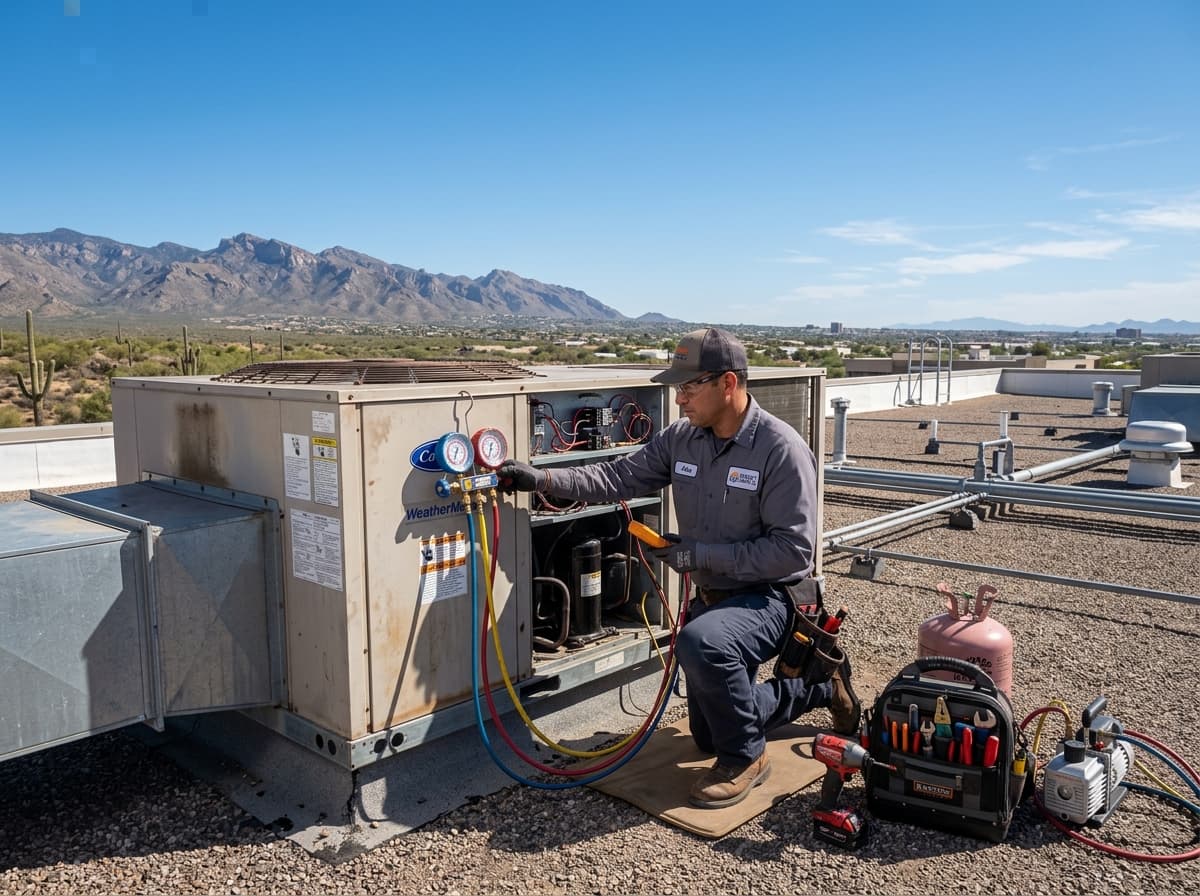
With summer temperatures regularly exceeding 110°F in St. George, your AC system works harder than almost anywhere in the country. Here's how to help it last.
St. George averages over 50 days per year above 100°F, and temperatures regularly push past 110°F in July and August. That puts Southern Utah AC systems in a category of their own — running almost continuously for months at a time under extreme thermal stress. Most of the AC failures we respond to in summer are entirely preventable with a bit of spring preparation.
Schedule a Spring Tune-Up Before It's Hot
The single most effective thing you can do is schedule a professional AC tune-up in March or April — before the heat arrives. A full tune-up includes cleaning the condenser coils, checking refrigerant levels, inspecting electrical connections, lubricating moving parts, and verifying the thermostat calibration.
A dirty or low-refrigerant system doesn't just cost more to run — it's far more likely to fail completely when temperatures peak in July. Replacing parts during a scheduled service visit costs a fraction of what an emergency call at 9 PM on a 108°F night costs.
Change Your Filter Every 30–60 Days in Summer
During peak cooling season, your AC is pulling air through the filter constantly. In Southern Utah, that air also carries desert dust and particulates that clog filters faster than in humid climates. A clogged filter forces your system to work harder, reduces airflow, and can cause the evaporator coil to freeze — which shuts your system down entirely.
In summer, we recommend checking your filter every 30 days and replacing it before it looks completely gray. A clean filter costs a few dollars; an evaporator coil repair runs several hundred.
Keep Your Outdoor Unit Clear
Your outdoor condenser unit needs at least two feet of clearance on all sides to dissipate heat effectively. Trim any shrubs or plants that have grown in around it, and rinse the coils gently with a garden hose once a month during summer to remove dust and debris.
Also make sure nothing is placed on top of or leaning against the unit — it needs unrestricted airflow to do its job. A blocked condenser runs hotter, works harder, and wears out faster.
Set Your Thermostat Strategically
Resist the temptation to blast the AC when you walk in from the heat. Setting your thermostat to 68°F won't cool your house faster — your system delivers the same cooling capacity regardless of the setpoint. It just means your compressor runs longer and works harder.
The Department of Energy recommends 78°F when you're home and slightly higher when you're away. A programmable or smart thermostat can manage this automatically and significantly extend the life of your equipment.
Know the Signs of a Struggling System
Even a well-maintained system can show warning signs mid-season. Watch for: warm air coming from vents when the AC is running, unusual sounds (grinding, squealing, banging), ice formation on the refrigerant lines, water pooling near the indoor air handler, or sudden spikes in your energy bill.
These symptoms almost never resolve on their own. Catching them early — and calling us before they cascade into a full compressor failure — is almost always the cheaper path.

Marlin Plumbing Heating & Air
Serving St. George, Utah since 1978