
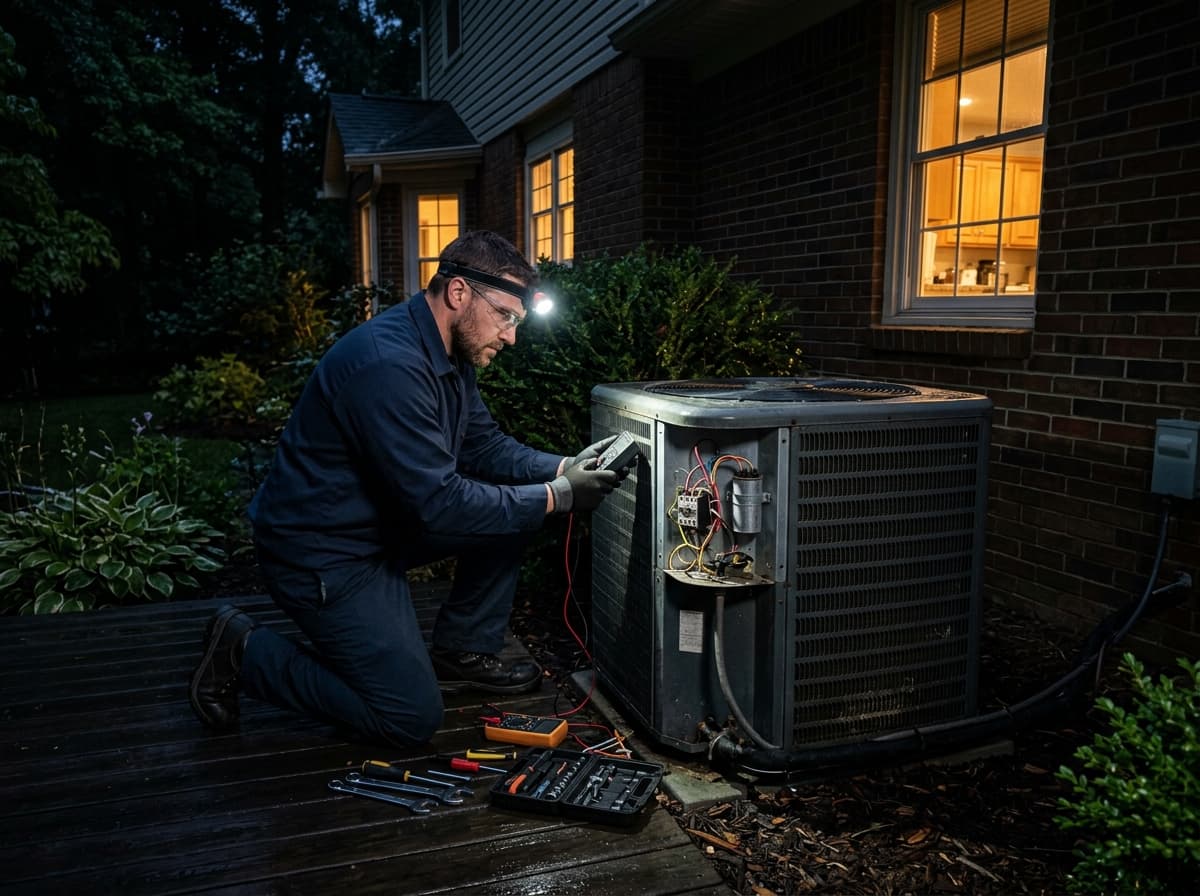
When your AC quits during a triple-digit St. George stretch, it's a safety issue — not just a comfort one. Here's what to do while help is on the way and when it's a true emergency.
In St. George, a broken air conditioner in July isn't an inconvenience — it's a genuine safety concern. When the thermometer sits above 100 for days on end, indoor temperatures climb fast, and the people most at risk are the ones least able to handle it. If your AC just quit, here's how to keep your household safe while help is on the way, and how to tell when it's a true emergency.
Why a Heat Wave AC Failure Is Serious
Triple-digit heat is dangerous for elderly family members, young children, and pets, whose bodies don't regulate temperature as well. Inside a home with no cooling, temperatures can rise into the 90s within hours, and heat-related illness sets in quietly — fatigue, dizziness, headache, then something worse. This is why we treat a dead AC in the middle of a Southern Utah heat wave as urgent, not routine.
Close the Blinds on the Sun Side
The fastest way to slow the heat gain is to block the sun. Close blinds, curtains, and shades on any window catching direct sunlight — especially the west and south sides during the hottest part of the afternoon. A surprising amount of a home's heat load comes straight through the glass, and cutting that off buys you cooler indoor temperatures while you wait.
It also helps to keep exterior doors shut and hold off on running the oven, stove, or dryer, since each of those dumps extra heat into a house that's already losing its cool.
Stay Hydrated and Use Fans
Drink water steadily even if you don't feel thirsty, and skip anything that dehydrates you. Fans help by moving air across your skin so sweat can do its job — just know that once the room air gets above body temperature, a fan alone stops cooling you effectively. Run fans to stay comfortable, but don't rely on them as your only defense in extreme heat.
A cool shower or damp cloths on the neck and wrists can bring your body temperature down quickly if anyone starts feeling overheated. Keep an eye on the people around you, since heat stress can come on before someone thinks to say anything.
Move to the Lowest, Coolest Level
Heat rises, so the lowest floor of your home will be the coolest. If you have a basement or a ground-floor room shaded from the sun, gather the household there during the hottest hours. Concentrating everyone in one cooler space is easier to manage than trying to keep the whole house comfortable.
Know Where the Cooling Centers Are
If the heat is severe and the repair can't happen right away, don't tough it out — especially with vulnerable family members. Public libraries, community centers, and shopping centers around St. George and Washington County offer air-conditioned refuge, and during extreme heat local agencies sometimes open designated cooling centers. Having a plan to relocate for a few hours is a smart safety net.
Quick Fixes vs. Real Repairs
Not every AC failure is catastrophic. Some causes are simple: a tripped breaker, a clogged air filter choking airflow, a thermostat set wrong, or a condensate drain safety switch that shut the system down. It's worth checking your breaker panel and filter before anything else — occasionally that's the whole fix.
Other problems are real repairs: a failed capacitor, a burned-out compressor or fan motor, a refrigerant leak, or a frozen coil. In our climate, units run hard all summer, and heat plus high-desert dust wear down components fast. Those issues need a tech and the right parts.
When It's a True Emergency
Call for emergency service — not next-day — when the heat is extreme and someone in the home is elderly, very young, has a medical condition, or is showing signs of heat stress. Same goes if temperatures inside are climbing and there's no cooler place to go. When safety is on the line during a triple-digit stretch, waiting isn't worth the risk.
When to Call Marlin
When your AC goes down in the heat, call us for 24/7 emergency AC repair. We offer same-day response across St. George and Southern Utah, and our techs arrive stocked to diagnose and fix the most common failures on the spot. Whether it's a quick capacitor swap or a bigger AC repair, we'll get your home cooling again as fast as possible.
Summer in Southern Utah is no time to be without air conditioning. If your system quits when you need it most, we're ready to get you back up and running.

Marlin Plumbing Heating & Air
Serving St. George, Utah since 1978