
Clogged drains are one of the most common plumbing calls we get — and most of them are preventable. Here's what actually works.
Slow drains rarely happen overnight. They build gradually — grease, hair, soap scum, and debris accumulating layer by layer until water backs up entirely. The good news is that most drain clogs are preventable with a few consistent habits, and caught early, they're inexpensive to clear. Here's what actually works.
Kitchen Drain: The Biggest Offender
Kitchen drains are the most commonly clogged drain in most homes, and the cause is almost always grease and food particles. Even small amounts of cooking grease, rinsed down the drain daily, accumulate on pipe walls and gradually narrow the opening. Combined with dish soap, it creates a stubborn buildup that hot water alone won't clear.
The fix is simple: never pour grease down the drain. Let it cool and dispose of it in the trash. Use a mesh drain strainer to catch food particles, and run hot water for 30 seconds after each use. Once a week, flush the drain with boiling water to help dissolve soap and light grease buildup.
Bathroom Drains: Hair Is the Culprit
Hair is the primary cause of bathroom drain clogs, and it doesn't take much to create a significant obstruction. A drain strainer or hair catcher — the kind that sits over the drain opening — is the single most effective prevention tool. They cost a few dollars and can be cleaned out in seconds.
Avoid the temptation to use chemical drain cleaners regularly. Products like Drano contain caustic chemicals that can damage older pipes with repeated use and are often only partially effective against hair clogs. Physical removal with a drain snake or the plastic 'Zip-It' tool works better and doesn't harm your plumbing.
What Not to Flush or Pour Down Drains
Beyond hair and grease, a surprising number of drain clogs we clear are caused by things that shouldn't be in drains at all. "Flushable" wipes are not truly flushable — they don't break down in the sewer system the way toilet paper does and are responsible for a significant portion of sewer line clogs. Paper towels, cotton balls, dental floss, and feminine hygiene products should never be flushed.
In the bathroom sink, toothpaste, shaving cream, and soap residue build up over time. A monthly flush of baking soda followed by white vinegar, then hot water, is a safe and effective way to keep bathroom sinks draining freely without chemicals.
When to Call a Plumber
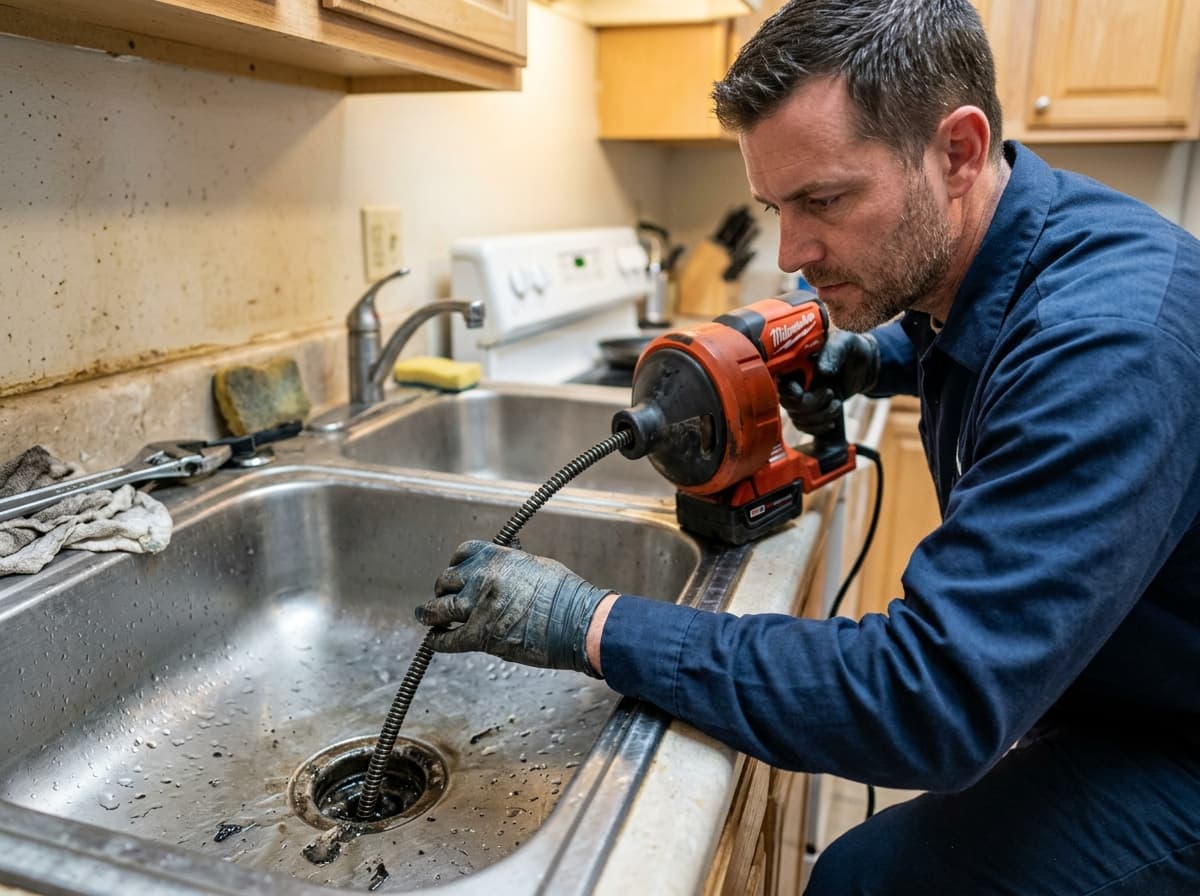
Some clogs require professional equipment to clear. If a plunger, drain snake, and boiling water haven't resolved the blockage, or if multiple drains in your home are slow or backed up simultaneously, the problem is likely in your main drain line rather than an individual fixture drain.
Multiple slow drains point to a main line blockage — often caused by tree root intrusion, a grease buildup deep in the pipe, or a damaged section of sewer line. This requires professional drain cleaning or mechanical augering equipment to clear safely, and possibly a sewer camera inspection to diagnose the root cause.
Caught early, main line clearing is relatively straightforward. Ignored, a partial blockage can become a complete backup and potentially cause sewage to back up into your home. If you're noticing multiple slow drains, call us before it becomes an emergency.

Marlin Plumbing Heating & Air
Serving St. George, Utah since 1978