
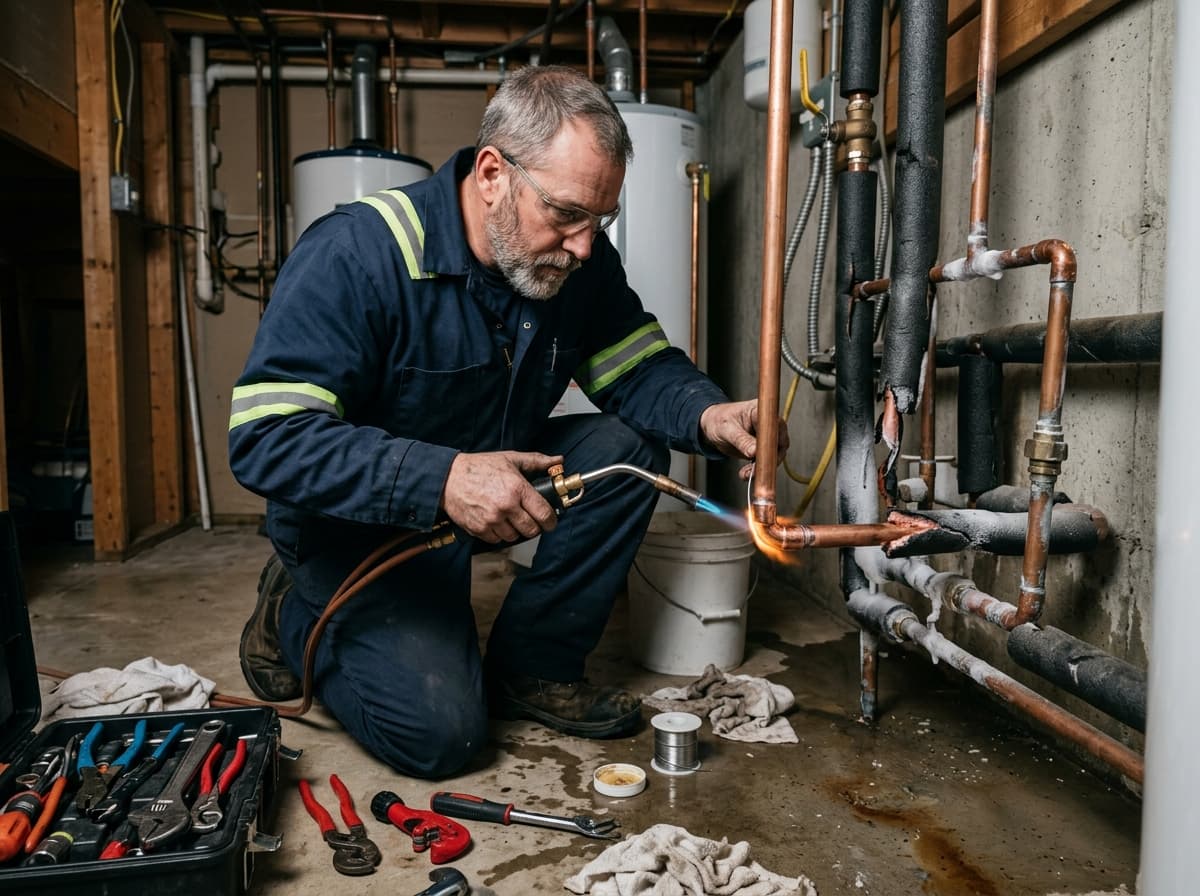
A burst pipe can dump hundreds of gallons into your home within minutes. The actions you take in the first few minutes determine how much damage you'll be dealing with.
Burst pipes happen. They happen in the middle of the night, when it's 15°F outside, when you're in the middle of something else. Knowing exactly what to do before it happens to you can be the difference between a manageable repair and a catastrophic one. Here's the sequence that minimizes damage every time.
Step 1: Shut Off the Main Water Supply Immediately
Your first move — before anything else — is to shut off the main water supply to your house. Don't look for the source of the burst first. Don't try to contain it first. Turn off the water first.
Know where your main shutoff is before you need it. In most St. George homes it's near the water meter, often in a utility closet, garage, or exterior wall. The shutoff is typically a gate valve (round handle) or ball valve (lever handle). Turn a gate valve clockwise until it stops; flip a ball valve 90 degrees so it's perpendicular to the pipe.
Step 2: Turn Off the Water Heater
Once the main supply is off, shut down your water heater. If you have a gas unit, turn the thermostat to the pilot setting. If it's electric, flip the breaker. Running a water heater without water in the tank can damage the heating element — and if a burst pipe has dropped your pressure, the heater may be operating dry without you knowing.
Step 3: Open Cold Taps to Drain the Lines
Open the cold water taps at your lowest point (usually a utility sink or outdoor hose bib) to drain remaining water from the pipes. This reduces the water that's still flowing toward the burst and helps relieve pressure in the system. Don't open hot water taps yet — you want to keep that water in the heater until pressure is fully equalized.
Step 4: Contain and Document the Damage
While you're waiting for a plumber, do what you can to contain standing water. Towels, buckets, and a wet/dry vac help. Move furniture and valuables out of the affected area. Take photos and video of everything — you'll want this documentation for your insurance claim.
If water has reached electrical outlets, panels, or fixtures, do not enter the area until the electricity to that portion of the house has been shut off at the breaker panel.
Step 5: Call a Licensed Plumber
A burst pipe is not a DIY repair. The pipe that burst is usually a symptom — the underlying cause (freezing, corrosion, pressure surge, faulty installation) needs to be diagnosed to prevent a recurrence. A licensed plumber will locate and repair the burst, inspect surrounding pipe for additional weakness, and restore your water supply safely.
Marlin Plumbing is available 24/7 for exactly this situation. If you're dealing with a burst pipe right now, call us at (435) 287-4445. We'll have a tech on the way within the hour.
How to Prevent Burst Pipes
While St. George winters are milder than most of Utah, temperatures do dip below freezing regularly between November and March. Pipes in exterior walls, garages, and crawl spaces are most vulnerable. Insulate exposed pipes before winter, keep cabinet doors under sinks open on cold nights to let warm air circulate, and let faucets drip slowly when overnight temperatures are expected to drop below 20°F.

Marlin Plumbing Heating & Air
Serving St. George, Utah since 1978