
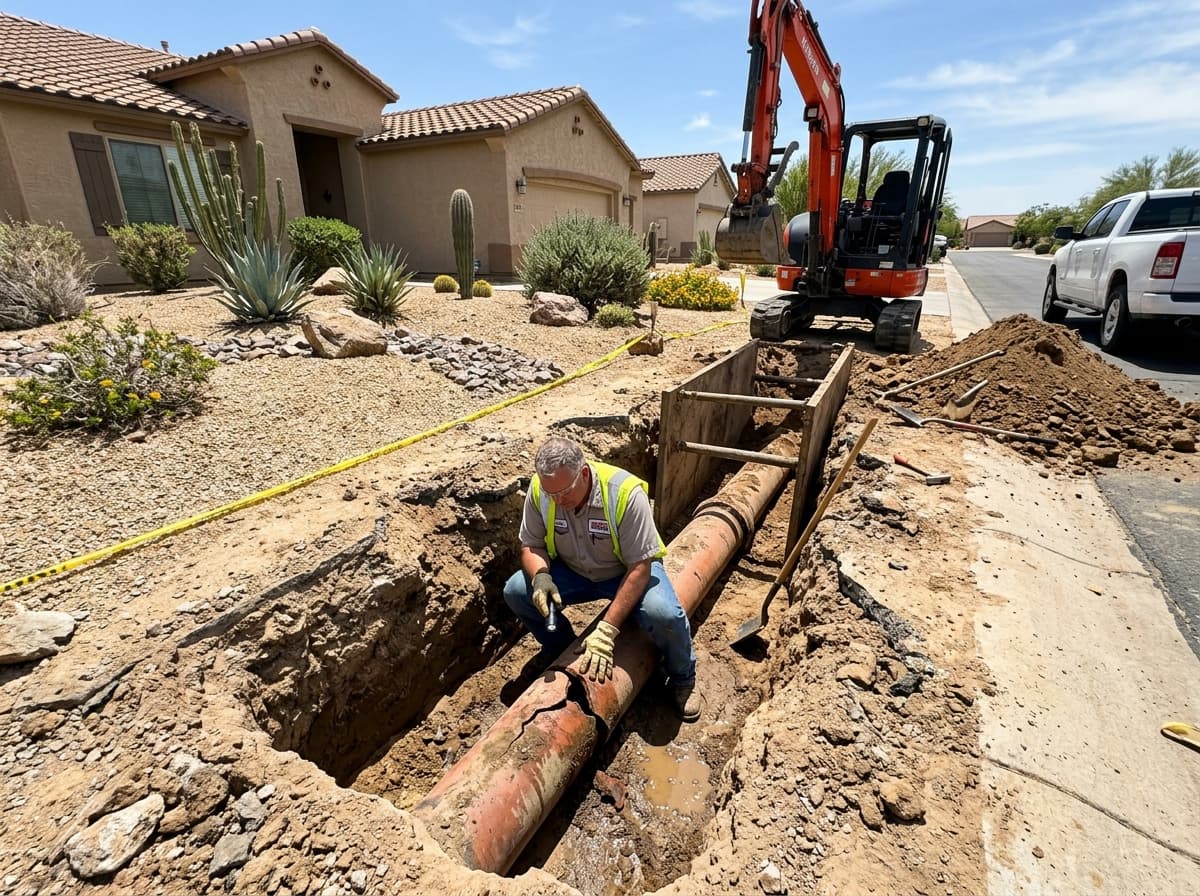
Multiple slow drains, gurgling toilets, and soggy patches in the yard often point to one thing: a failing main sewer line. Here's how to spot the warning signs before a backup.
A main sewer line problem rarely announces itself all at once. It builds quietly — a slow drain here, a gurgle there — until one day sewage is backing up into the lowest fixtures in your house. The homeowners who avoid that mess are the ones who catch the early signs and act. Here's what Southern Utah homeowners should be watching for, and why waiting is the most expensive choice.
Multiple Slow Drains and Gurgling Toilets
A single slow sink is usually a local clog. But when several drains slow down at the same time — the tub, a bathroom sink, and the kitchen all sluggish together — the problem isn't at any one fixture. It's downstream, in the main line that carries everything out of the house. That shared bottleneck is one of the clearest early warnings of a sewer issue.
Listen for gurgling, too. If your toilet gurgles or the water level rises and falls on its own, air is getting trapped in the line because something is partially blocking the flow. You might also hear bubbling from a drain when you run water elsewhere. Those noises mean waste and air aren't moving freely through the main — a blockage is building.
Sewage Smell Inside or Out
A healthy sewer system is sealed and vented so you never smell it. If you catch a persistent sewage odor in the house, around a floor drain, or out in the yard, that's a sign the line is cracked, blocked, or leaking. It's not something to mask with air freshener — the smell is telling you raw sewage isn't going where it should.
Backups — The Point You Don't Want to Reach
When wastewater comes up through a floor drain, tub, or the lowest toilet in the house, the main line is blocked enough that sewage has nowhere to go but back inside. This is the failure everything else was warning you about. A backup means cleanup, potential damage to floors and belongings, and an urgent repair — all of which cost far more than addressing the problem when it was still just a slow drain.
Soggy or Unusually Green Patches in the Yard
In our dry high-desert climate, a patch of lawn that stays wet, sinks, or grows noticeably greener and faster than everything around it stands out. A cracked or leaking sewer line underground acts like a fertilizer and irrigation line for the grass above it. If part of your yard is suspiciously lush while the rest bakes in the summer sun, the line beneath it may be leaking.
What Causes Sewer Failures Here
Tree and shrub roots are the number one offender — they seek out the moisture and nutrients inside sewer lines and work their way into joints and cracks, then expand until they choke the pipe. Older St. George homes often have aging clay or early-generation pipe that's more prone to cracking and root intrusion.
Our desert soil adds another factor: ground shifting. Expansive and shifting soils move with moisture changes, and that movement can crack pipe, misalign joints, or create low spots where waste collects. Decades of that stress add up.
A Camera Inspection Removes the Guesswork
The only way to know for certain what's happening inside your sewer line is to look. A sewer camera inspection feeds a waterproof camera down the line so we can see exactly where the problem is — a root mass, a crack, a collapse, or a sag — and how far down it sits. That means the repair targets the actual problem instead of digging blind.
It also tells you the scope. Sometimes it's a single root intrusion that can be cleared; sometimes a section needs replacement. Either way you're making a decision based on what's really down there.
Trenchless Options and Why Not to Wait
Sewer repair doesn't always mean tearing up your whole yard. Depending on the line's condition, trenchless methods can rehabilitate or replace the pipe through small access points, sparing your landscaping and driveway. But those options depend on catching the line before it fully collapses — once it's completely failed and backing up, your choices narrow and the job gets bigger.
When to Call Marlin
If you're seeing slow drains across the house, hearing gurgles, catching a sewage smell, or noticing a soggy patch in the yard, don't wait for a full backup to force your hand. Give us a call and we'll run a sewer camera inspection to pinpoint exactly what's going on, then walk you through your sewer line repair options — including trenchless where it's a fit.
Catching a sewer problem early is the difference between a planned repair and an emergency cleanup. In Southern Utah's root-heavy, shifting soil, staying ahead of it pays off.

Marlin Plumbing Heating & Air
Serving St. George, Utah since 1978