
Recurring leaks, rusty water, and weak pressure throughout the house are signs your pipes are giving out. Here's how to tell when repiping makes more sense than another patch.
No one wants to hear that their home needs new pipes. But if you're calling a plumber every few months for another leak, or you've stopped drinking the water because it comes out rusty, you may be past the point where patch repairs make financial sense. Southern Utah's older housing stock and brutally hard water are hard on plumbing, and at a certain age a whole-home repipe becomes the smarter move. Here's how to know when you've reached that point.
Why St. George Pipes Wear Out Faster
Two culprits show up over and over in older St. George homes: galvanized steel and polybutylene. Galvanized pipe corrodes from the inside out, slowly choking off water flow and shedding rust into your water. Polybutylene, common in homes built from the late 1970s into the mid-90s, becomes brittle and fails without much warning. Both were standard before their weaknesses were understood.
What makes it worse here is our water. St. George has some of the hardest water in the country — 15-plus grains per gallon of dissolved calcium and magnesium. That mineral load accelerates corrosion and scale buildup inside the pipes, so plumbing that might last decades elsewhere gives out sooner in the high desert.
Recurring Leaks and a History of Patches
One leak is a repair. Three or four leaks in different spots over a couple of years is a pattern — and the pattern is telling you the pipe material itself is failing, not just one bad fitting. Once a system starts leaking in multiple places, fixing them one at a time becomes a game of whack-a-mole that costs more over time than replacing the pipes.
If you've got a folder of past plumbing invoices and each one is a different section of the house, that history is your answer. The pipe is aging out everywhere at roughly the same rate.
Rusty or Discolored Water
Water that comes out brown, yellow, or with a metallic taste — especially first thing in the morning after it's been sitting in the pipes overnight — usually means corrosion inside galvanized lines. It's not just unpleasant; it's a sign the interior of the pipe is deteriorating and the walls are getting thinner.
If flushing the tap clears it up briefly but it keeps coming back, that's corroding pipe, not a one-time disturbance in the line.
Low Pressure Throughout the House
If pressure is weak at every fixture — not just one faucet — corrosion and scale have likely narrowed the pipes from the inside. Decades of hard-water mineral buildup shrink the usable diameter of the pipe until only a trickle gets through. A single slow faucet is a fixture problem; weak flow everywhere at once points to the supply lines themselves.
PEX vs. Copper: What Goes Back In
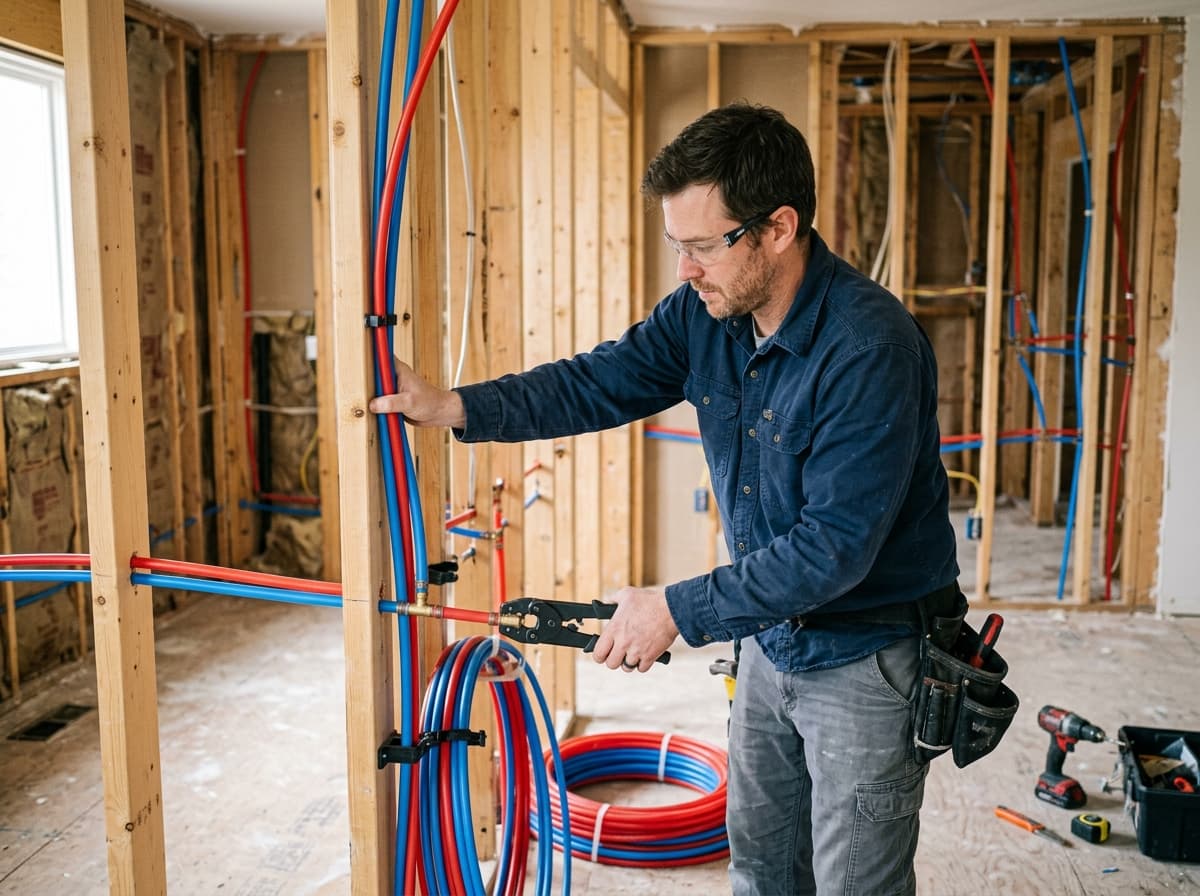
Most repipes today use PEX or copper. PEX is flexible, faster to install, resists scale buildup well, and doesn't corrode — a real advantage with our hard water — and it's typically the more affordable option. Copper is rigid, extremely durable, and time-tested, but it costs more in both material and labor and can eventually scale up in hard-water conditions.
For a lot of Southern Utah homes, PEX is the practical choice, but the right answer depends on your layout, budget, and preferences. A good tech will walk you through the trade-offs rather than pushing one option.
Whole-Home vs. Partial Repipe
You don't always have to do everything at once. If the failures are concentrated in one run — say the lines feeding the kitchen and a bathroom — a partial re-pipe can address the worst of it for less. But if the whole system is the same aging material installed at the same time, replacing it all in one project usually costs less per foot and saves you from repeating the disruption in a year or two.
Is It as Disruptive as It Sounds?
The word repipe sounds like your house gets torn apart, but a professional crew keeps the impact contained. Most whole-home repipes are done in a few days, with access cut only where needed and the walls patched afterward. Water is typically off for only part of each work day, and a good crew protects your floors and belongings as they go. It's a big project, but it's a planned, predictable one — not the chaos of an emergency flood.
When to Call Marlin
If any of this sounds like your home — repeat leaks, discolored water, pressure that's dropped off, or you simply own an older St. George house with original pipes — it's worth having one of our techs evaluate your system. We can run leak detection to confirm what's failing and where, then give you an honest recommendation on whether a partial re-pipe or a full whole-home repipe is the right call.
Southern Utah's hard water is relentless on plumbing. Replacing failing pipes on your schedule, before the next leak becomes a flood, is one of the best long-term investments you can make in your home.

Marlin Plumbing Heating & Air
Serving St. George, Utah since 1978