
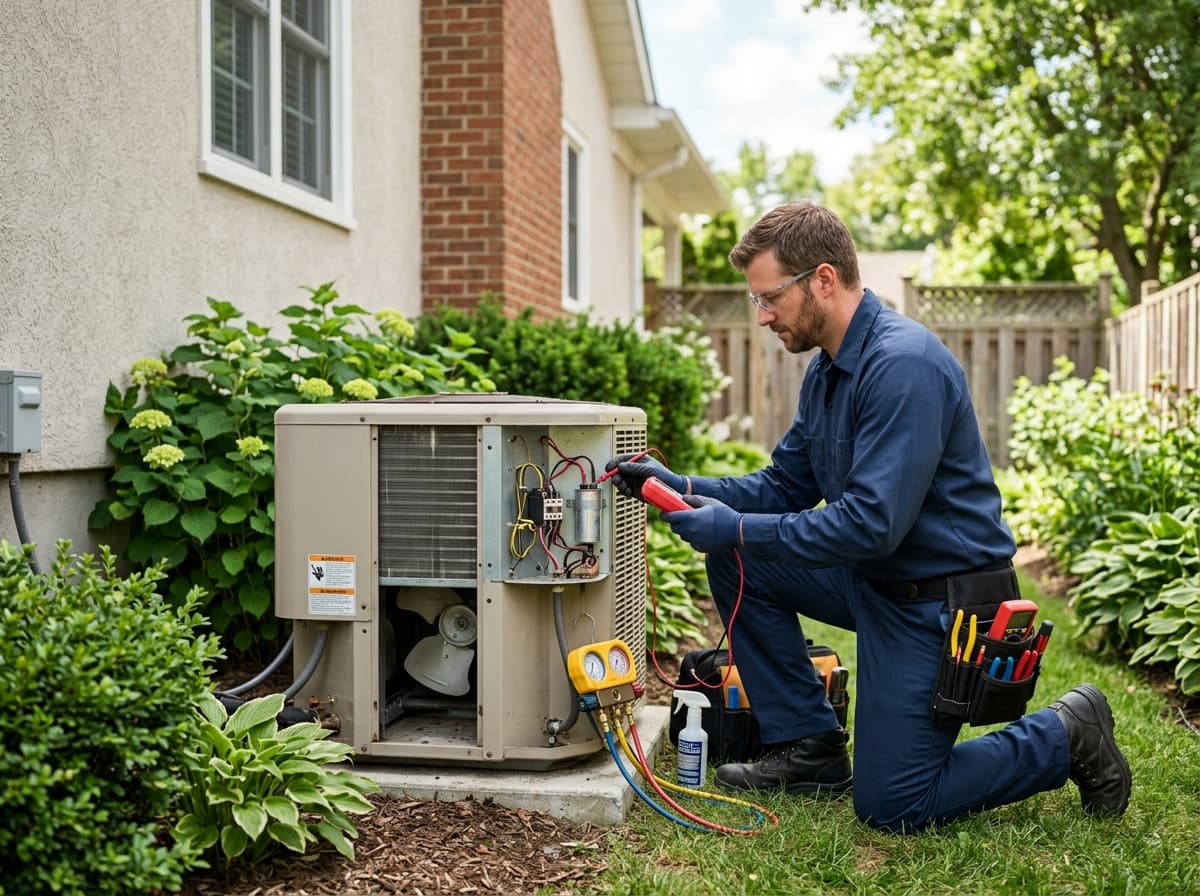
In St. George, the first triple-digit day arrives fast — and it's the worst time to discover your AC can't keep up. A spring tune-up catches the small problems before they become June breakdowns.
Every year it plays out the same way. The weather warms up, homeowners flip their AC on for the first time in months, and the systems that limped through last summer finally give out — usually on the first 100-degree afternoon, when every HVAC company in Washington County is already booked solid. A spring tune-up in March or April is how you get ahead of that rush and make sure your system is ready before the desert heat shows up in earnest.
Why March and April Are the Right Months
St. George doesn't ease into summer. We go from mild spring days to triple digits in what feels like a couple of weeks, and once that first 100-degree day lands, an AC that's low on refrigerant or running a tired capacitor will pick that exact moment to quit. Booking your tune-up in early spring means we catch those problems while the weather is still forgiving and you're not waiting days for a repair slot.
It's the difference between a scheduled, low-stress visit and an emergency call during a heat wave. One you plan around; the other plans around you.
A Little Low on Refrigerant Costs You a Lot
Here's something most homeowners don't realize: a system that's just 10% low on refrigerant can lose around 20% of its cooling capacity. That's a small leak producing a big drop in performance — and you often can't feel it in the spring when the load is light. Come July, though, that same system is running constantly, never quite reaching the thermostat setting, and driving your power bill up while it struggles.
A tune-up checks refrigerant charge and pressures so we can spot a slow leak before it leaves you sweating through the hottest part of the year.
Desert Dust Is Hard on Your Condenser
Your outdoor condenser unit spends all winter collecting the fine dust and grit that blows across Southern Utah. By spring, those coils are often caked with a layer of debris that acts like a blanket — it traps heat and keeps the system from releasing it the way it's supposed to. The result is a unit that works harder, runs hotter, and wears out faster than it should.
Cleaning the condenser coils is one of the most valuable parts of a tune-up here specifically because of our climate. It's not a cosmetic step; it directly affects how efficiently your system can dump heat on a 108-degree day.
What a Tune-Up Actually Covers
A proper tune-up is more than a quick look. Our techs check and adjust refrigerant charge, clean the condenser and evaporator coils, test the capacitor and electrical connections, inspect the contactor and wiring, check airflow and the blower, clear the condensate drain, and verify the thermostat is calling and cycling correctly. We also replace or check the air filter and look for the early signs of parts that are on their way out.
The goal is simple: find the small stuff now, while it's cheap and easy to fix, instead of during a breakdown when it's neither.
Catching a Failing Capacitor Before June
The capacitor is one of the most common summer failures we see, and it's a perfect example of why spring matters. A capacitor is the small part that gives your compressor and fan motor the jolt they need to start. In the heat, a weak one finally gives up — and when it does, your AC won't start at all, usually on the hottest day of the year.
During a tune-up we test the capacitor's actual output, not just whether it's working today. A reading that's drifting out of spec tells us it's aging, and replacing a $20 part on a scheduled visit beats a no-cool emergency call in June every time.
Protecting a Lifespan the Heat Already Shortens
In a milder climate, an air conditioner might run 12 to 15 years. In the high desert, where systems run long and hard for months on end, that number is more realistically 7.5 to 10 years. Our heat simply asks more of the equipment, and every summer of neglected maintenance takes a bite out of the calendar.
Regular tune-ups won't make your AC last forever, but they genuinely slow the wear. Clean coils, correct charge, and healthy electrical parts mean the system isn't fighting itself every time it kicks on — and that adds years you'd otherwise lose to our climate.
When to Call Marlin
If you haven't had your system looked at since last summer, now is the time — before the first 100-degree day, not after. Our techs will run a full AC tune-up, clean the desert dust off your condenser, check your refrigerant charge, and test the electrical parts most likely to fail in the heat. If we find something that needs an AC repair, you'll hear about it while there's still time to handle it calmly.
We've been keeping St. George homes cool since 1978, and we know exactly what our summers do to these systems. Get on the schedule this spring and head into the heat with a unit you can count on.

Marlin Plumbing Heating & Air
Serving St. George, Utah since 1978