
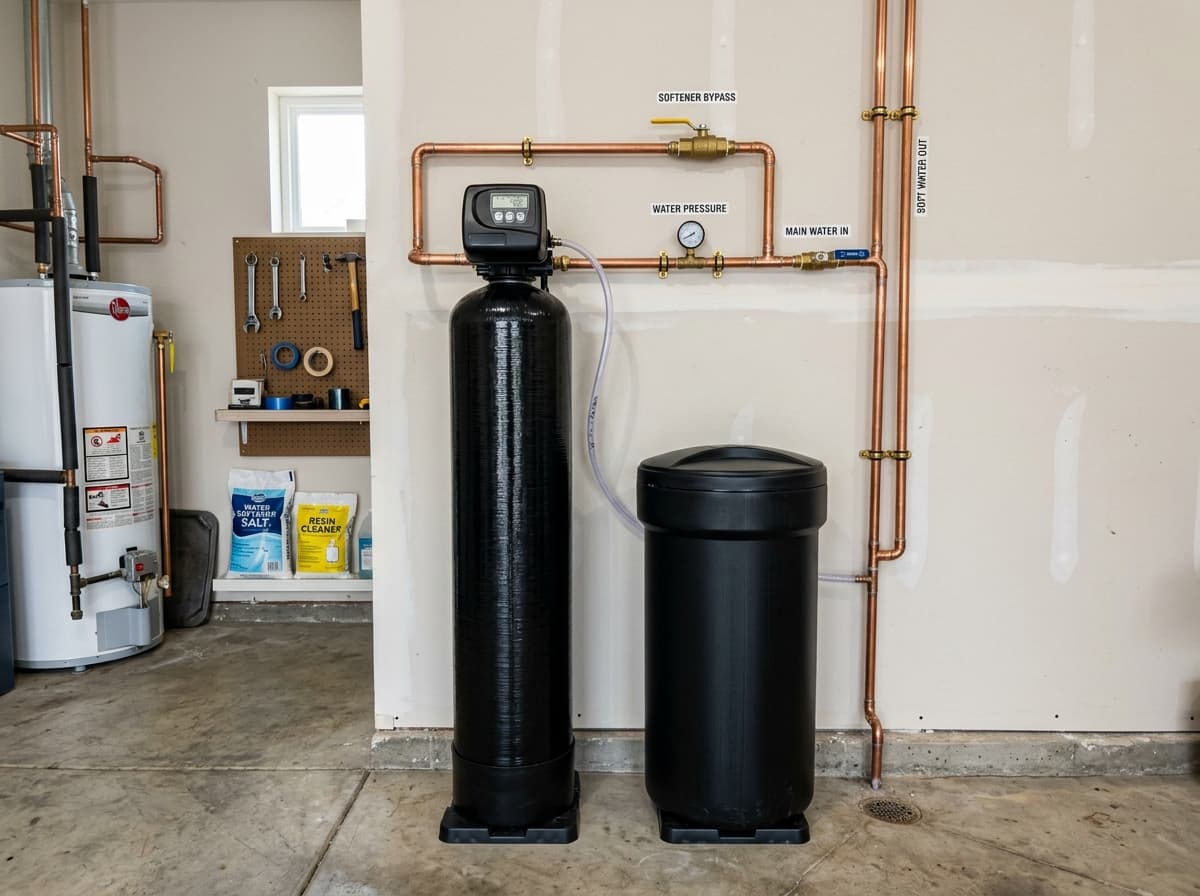
St. George has some of the hardest water in the United States. Here's what that means for your plumbing, appliances, and water quality — and how a softener changes everything.
If you've lived in Southern Utah for more than a few months, you've probably noticed it — the white film on your shower doors, the spots on your dishes, the way soap doesn't lather the way it should. That's hard water, and St. George has some of the hardest water in the country. The Colorado River basin that supplies much of Washington County carries extremely high concentrations of dissolved minerals, primarily calcium and magnesium.
What Hard Water Actually Does to Your Home
Hard water isn't a health risk, but it's expensive. The scale that builds up on your shower doors is also building up inside your pipes, water heater, dishwasher, washing machine, and any other appliance that uses water. That scale acts as an insulator inside your water heater — requiring more energy to heat the same amount of water and dramatically shortening the unit's lifespan.
We've replaced water heaters in St. George homes that were only 6–7 years old because scale buildup had already caused irreparable damage. The EPA estimates that a water heater operating with hard water can lose up to 30% of its efficiency. Across all your appliances, the cost adds up quickly.
Signs You're Dealing With Hard Water
You likely have hard water if you're seeing any of these: white or yellowish scale around faucets and showerheads, spots on glasses and dishes even after washing, soap that feels like it won't rinse off, dry or itchy skin after showering, stiff or dull laundry even with fabric softener, or reduced water pressure caused by scale inside pipes.
St. George municipal water typically tests between 250–400 mg/L of hardness (parts per million). Anything above 180 mg/L is classified as 'very hard.' For context, the recommended level for household water is under 60 mg/L.
How a Water Softener Works
A whole-home water softener uses an ion exchange process to remove calcium and magnesium from your water before it enters your home's distribution system. The system's resin beads attract and hold calcium and magnesium ions, releasing sodium ions in exchange. The result is water that behaves very differently — it lathers easily, rinses cleanly, and doesn't leave scale deposits.
The softener periodically regenerates itself using salt, flushing the captured minerals down the drain and recharging the resin beads. Modern systems are highly efficient and use far less salt than older generations did.
The Real Return on Investment
A quality whole-home water softener installed by a licensed plumber typically costs $1,200–$2,500 depending on household size and system capacity. That sounds significant — until you consider what hard water costs over time: shortened appliance lifespans, higher energy bills, more frequent plumbing repairs, and added cleaning products.
Most families in Southern Utah find that a water softener pays for itself within 3–5 years in appliance savings alone. Beyond the economics, the quality-of-life difference is immediately noticeable — cleaner dishes, softer skin and hair, brighter laundry, and no more scrubbing mineral deposits.

Marlin Plumbing Heating & Air
Serving St. George, Utah since 1978