
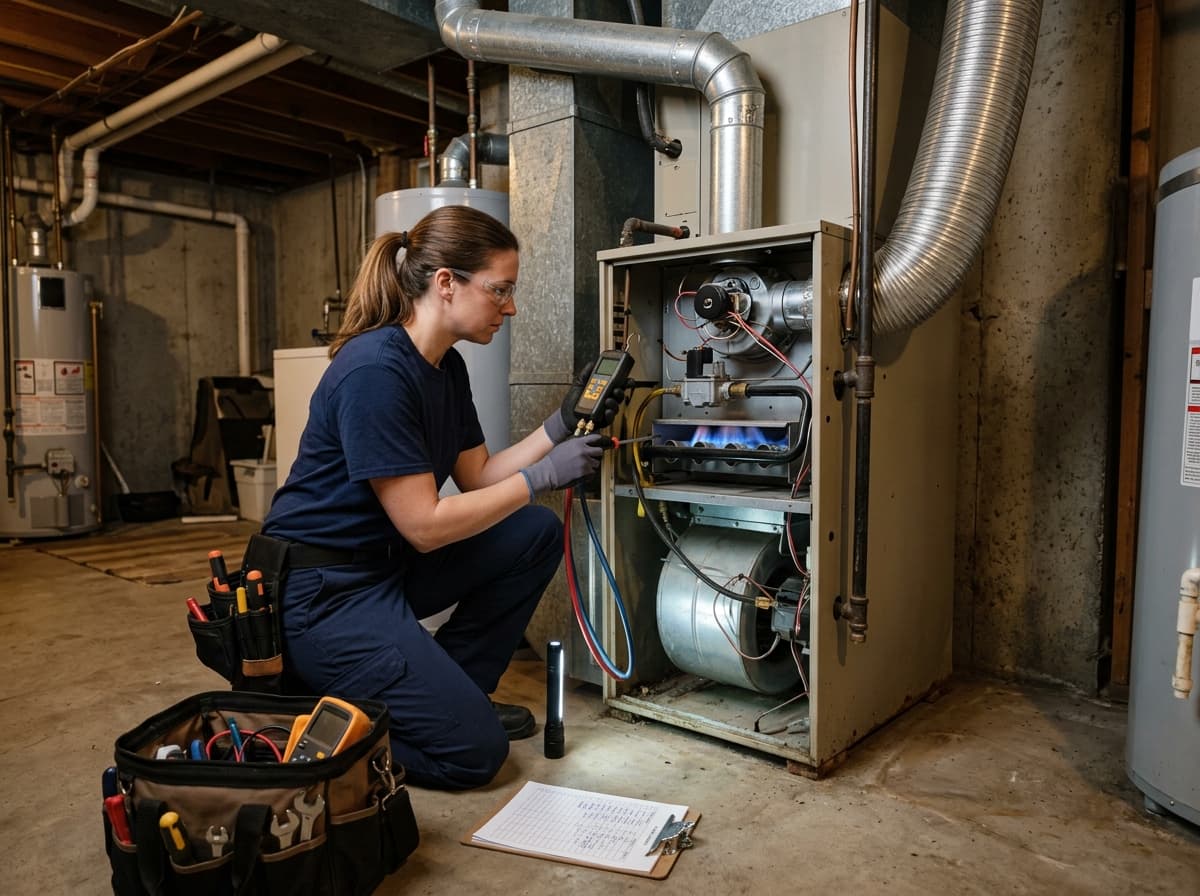
St. George days are mild, but desert nights routinely drop below freezing. Here's why furnaces that sit idle all year struggle when the cold finally hits — and how to keep the heat on.
Southern Utah isn't Minnesota, and that's exactly the problem. Our winter days are sunny and mild, so it's easy to forget that St. George nights in January routinely dip below freezing. Your furnace spends most of the year switched off, then gets asked to run hard through a string of cold desert nights it wasn't warmed up for. That gap between light use and sudden demand is where most no-heat calls come from — and nearly all of them are preventable.
A Furnace That Sits Idle Isn't a Furnace That's Fine
Because our heating season is short, a lot of homeowners assume a rarely-used furnace stays in good shape. It's the opposite. A unit that sits still for eight or nine months collects dust, its igniter and burners never get exercised, and small issues have plenty of time to develop unnoticed. When the first real cold snap arrives and the furnace kicks on for the first time in months, that's when weak parts finally give out.
The fix is simple: the furnace needs to be checked before you rely on it, not after it fails. A furnace that ran fine last March can absolutely leave you cold this January.
Desert Dust Is Hard on Burners and Filters
St. George's fine, blowing high-desert dust gets into everything, and your HVAC system is no exception. That grit clogs air filters faster than most manufacturers assume, and it settles onto burners where it disrupts a clean burn. A choked filter starves the system for airflow, which makes the furnace overheat and shut itself down — often right when you need it most.
This is why filter changes matter more here than in a lot of the country. A filter that would last three months elsewhere can be packed solid in half that time during a dusty stretch.
Watch for Short Cycling
Short cycling is when your furnace turns on, runs briefly, shuts off, then fires up again a few minutes later. It usually means the unit is overheating and tripping its safety limit, and a dirty filter or blocked airflow is the most common cause. Beyond the discomfort of a house that never quite warms up, short cycling wears out furnace components fast and drives your gas bill higher for less heat.
A Yellow Flame Is a Warning, Not a Quirk
A healthy gas burner burns with a crisp blue flame. If you look at your burners and see yellow or orange flames instead, that's a sign of incomplete combustion — often from dust, soot, or a dirty burner — and it can produce carbon monoxide. Combine that with cold spots from room to room, a climbing gas bill, or an odd smell when the furnace first starts up, and you've got a system that's telling you it needs attention.
Some startup smell in the first burn of the season is normal as dust burns off. A smell that lingers, or one that's sharp or acrid, is not — shut the system down and call for service.
The Two Failures That Actually Leave You Cold
The real risks in a neglected furnace are a clogged burner and a cracked heat exchanger. A clogged burner robs you of heat and efficiency. A cracked heat exchanger is more serious: it can let combustion gases, including carbon monoxide, leak into the air your family breathes. Carbon monoxide is odorless and colorless, which is why a working CO detector on every level of your home is not optional in a house with gas heat.
Neither of these problems announces itself loudly. Both are the kind of thing a technician catches during a routine inspection long before they turn into an emergency — or a danger.
The Case for a Fall Tune-Up
The single best thing you can do to avoid a no-heat night is schedule a tune-up in the fall or early winter, before you're leaning on the furnace every night. A proper tune-up cleans the burners, checks the heat exchanger for cracks, tests the igniter and safety controls, replaces the filter, and verifies the whole system runs the way it should. It's a small, planned expense that heads off the far larger cost — and misery — of an emergency breakdown during a cold snap.
When to Call Marlin
If your furnace is short cycling, burning yellow, leaving cold spots, or you just can't remember the last time it was serviced, it's worth having one of our techs look it over before the next freeze. Our annual furnace maintenance covers everything from the burners to the heat exchanger to the safety controls, so you head into winter knowing the system will hold up. We've been keeping Southern Utah homes warm since 1978, and we know exactly how our climate treats these units.
And if the worst happens on the coldest night of the year, we offer 24/7 emergency furnace repair. No St. George family should have to wait until morning to get their heat back on.

Marlin Plumbing Heating & Air
Serving St. George, Utah since 1978