
St. George water is treated and safe by regulation — but it's also some of the hardest in the country. Here's how to test what's coming out of your tap and which tools actually fix it.
If you've ever wondered whether the water coming out of your St. George tap is actually safe to drink, you're asking a fair question — and the answer has two parts. The water your city delivers is treated and tested to meet federal and state safety standards, so it's safe by regulation. But safe and pleasant aren't the same thing. Southern Utah has some of the hardest water in the entire country, and that hardness, along with chlorine and dissolved minerals, is why so many homeowners notice a difference the moment they move here.
What "Hard Water" Actually Means Here
Water hardness is a measure of dissolved calcium and magnesium, counted in grains per gallon. Anything above 7 grains is considered hard. St. George and the surrounding Washington County communities routinely test at 15 or more grains per gallon — placing us among the hardest water regions in the United States.
That hardness is why you see chalky white crust on faucets and showerheads, spots on glasses fresh out of the dishwasher, soap that never quite lathers, and a film on your skin after a shower. It's harmless to drink, but it's rough on your plumbing, your water heater, and your fixtures — and most people simply don't love the taste.
How to Actually Test Your Water
Before you spend a dime on treatment, find out what you're dealing with. The city publishes an annual Consumer Confidence Report that lists what's in the municipal supply, and it's a good baseline. But that report reflects the water leaving the treatment plant — not what's coming out of your particular tap after traveling through city mains and your home's own pipes.
For your specific home, an inexpensive at-home test strip will tell you your hardness level and chlorine in a few minutes. For a complete picture — hardness, chlorine, dissolved solids, pH, and more — have it professionally tested. That's the honest way to match a solution to your actual water instead of guessing.
Tool #1: A Water Softener for Hardness
If your water tests hard — and in Southern Utah it almost certainly will — a whole-home water softener is the foundation. A softener uses ion exchange to pull the calcium and magnesium out before that water ever reaches your pipes, fixtures, or appliances.
The payoff is felt all over the house: no more scale buildup shortening the life of your water heater, softer skin and hair, brighter laundry, spotless dishes, and soap that finally lathers. A softener doesn't purify your water for drinking — that's not its job — but it protects everything downstream from the mineral load that defines our region.
Tool #2: Whole-Home Filtration for Chlorine, Sediment, and Taste
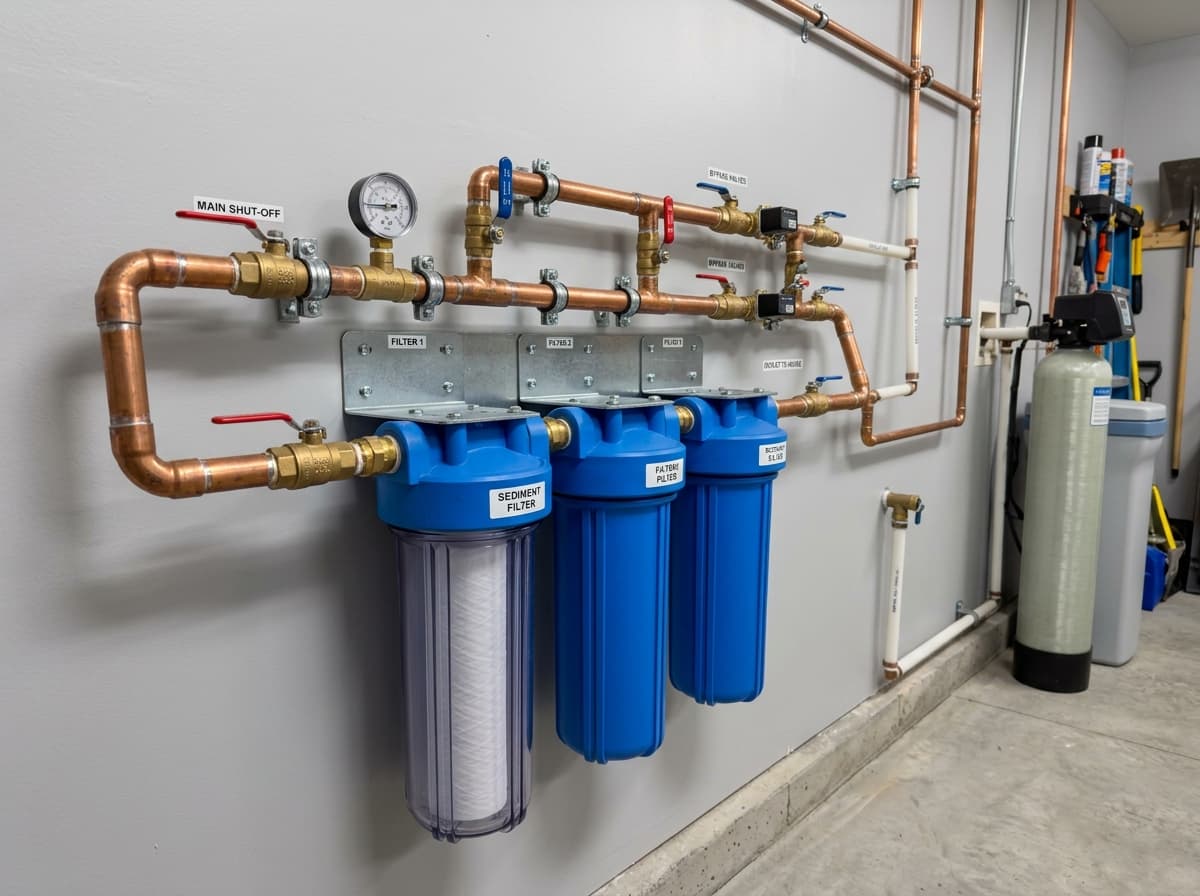
Municipal water is treated with chlorine to keep it safe on its journey to your home — a good thing for safety, but the source of the chemical taste and smell many homeowners notice. A whole-home filtration system installs at your main line and strips out chlorine, sediment, and other elements before the water branches off through the house.
The difference shows up at every tap: cleaner-tasting water, no chlorine odor in the shower, and less sediment reaching your fixtures. Paired with a softener, whole-home filtration handles the two things people notice most about Southern Utah water — the hardness and the chlorine.
Tool #3: Reverse Osmosis for the Purest Drinking Water
For the cleanest possible water at the tap you actually drink from, reverse osmosis is the gold standard. An RO system is a point-of-use unit — usually installed under the kitchen sink — that forces water through a fine membrane, removing dissolved solids, minerals, and a wide range of contaminants down to a microscopic level.
The result is bottled-water quality straight from a dedicated faucet, for drinking, cooking, coffee, and ice — without the recurring cost and waste of plastic bottles. Many St. George homeowners pair RO under the kitchen sink with a whole-home softener and filter for the complete package.
So Who Needs What?
Almost every home in the St. George area benefits from a softener — that's how hard our water is. Add whole-home filtration if chlorine taste and smell bother you or you want cleaner water at every fixture. Add point-of-use reverse osmosis if you want the absolute purest water for drinking and cooking.
You don't have to do all three at once. Start with a professional water test, fix the biggest problem first, and build from there. The right combination depends entirely on what your water actually contains and what bothers you most.
When to Call Marlin
If you're not sure what's in your water or which of these tools you actually need, that's exactly what we're here for. We'll test your water, walk you through the results in plain language, and recommend only what makes sense for your home — whether that's a whole-home water softener, whole-home filtration, a point-of-use reverse osmosis system, or a combination of the three.
We've been treating Southern Utah's famously hard water since 1978, so we know these mineral levels better than anyone. Give us a call at (435) 287-4445 and we'll help you get clean, great-tasting water flowing throughout your home.

Marlin Plumbing Heating & Air
Serving St. George, Utah since 1978