
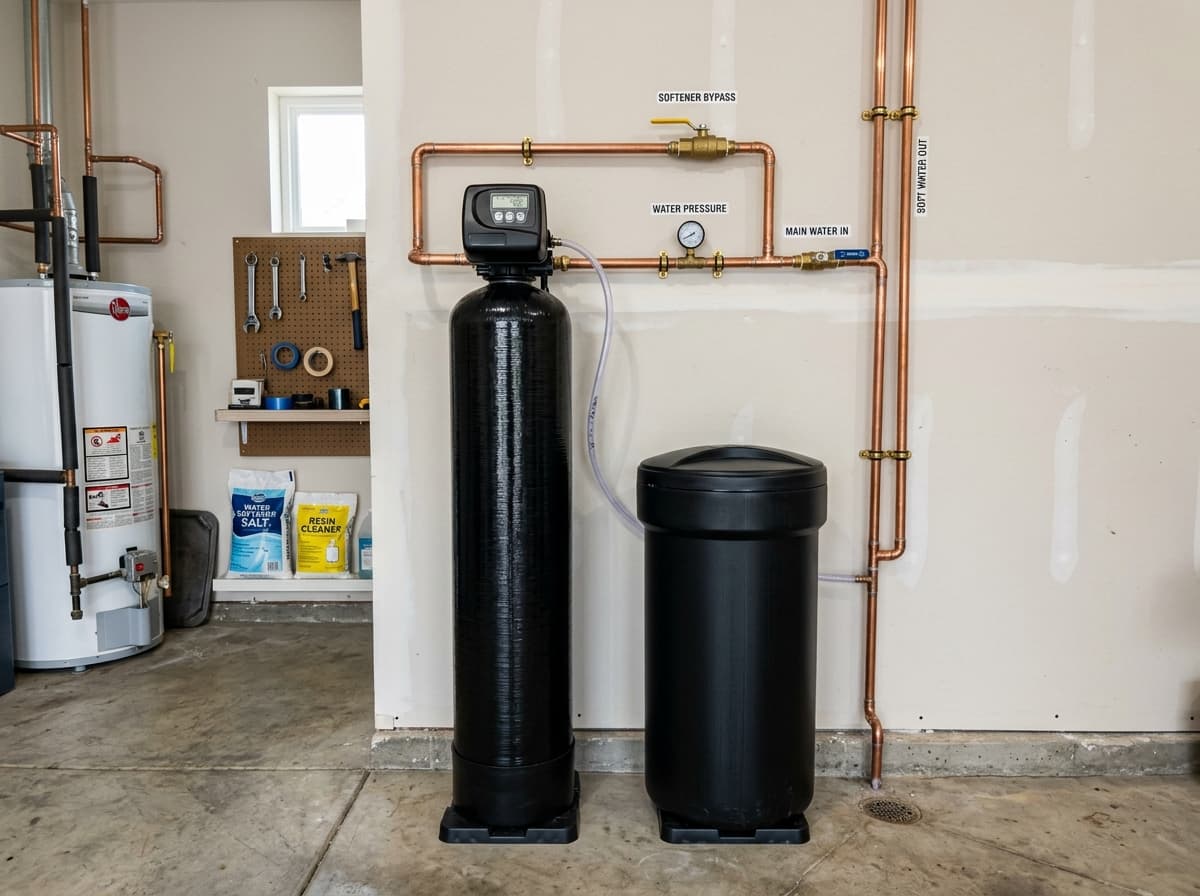
They sound similar, but a water softener and a reverse osmosis system solve completely different problems. Here's what each one does and why many St. George homes end up needing both.
Ask around St. George about water treatment and you'll hear "water softener" and "reverse osmosis" used almost interchangeably. They're not the same thing, and confusing them leads homeowners to buy the wrong system for the problem they're actually trying to solve. The short version: a softener treats hardness for your whole home, and reverse osmosis purifies drinking water at a single tap. Here's how to tell which one — or which combination — your home needs.
What a Water Softener Does
A water softener has one job: remove the hardness minerals — calcium and magnesium — from the water coming into your house. It's a whole-home system, plumbed into your main line so that every faucet, shower, and appliance gets softened water. It works by ion exchange, swapping those hardness minerals out before they reach your pipes.
What it does not do is purify your water for drinking. A softener isn't designed to pull out contaminants like lead or chlorine — that's simply not its purpose. It's a hardness problem-solver, and in Southern Utah, hardness is a very real problem.
Why Hardness Matters So Much Here
St. George has some of the hardest water in the country, often 15 grains per gallon or more. That mineral load is relentless. It scales up the inside of your pipes, coats the heating element in your water heater, shortens the life of dishwashers and washing machines, spots your glassware, and leaves your skin dry and your hair filmy. Every appliance that touches water pays a tax to our hard water.
A softener protects all of it at once — plumbing, water heater, appliances, and the way water feels on your skin and hair. In this region, it's less a luxury than basic protection for the equipment in your home.
What Reverse Osmosis Does
Reverse osmosis, or RO, is a purification system. It pushes water through a very fine membrane that removes contaminants a softener leaves behind — things like lead, chlorine, nitrates, and total dissolved solids. The result is clean, great-tasting water for drinking and cooking.
RO is typically installed at a single point of use, most often under the kitchen sink with a dedicated faucet, rather than treating the whole house. That's by design: you want purified water where you drink it, and it isn't practical or necessary to run every shower and toilet through an RO membrane.
Different Problems, Different Tools
Here's the cleanest way to keep them straight. A softener answers the question "why is this water beating up my appliances and leaving spots on everything?" Reverse osmosis answers the question "what's actually in the water I'm drinking, and how do I get it out?" One protects your home; the other purifies what you drink.
Buying a softener and expecting better-tasting drinking water, or buying an under-sink RO system and expecting your water heater to stop scaling, is how homeowners end up disappointed. Match the tool to the problem.
Why Many St. George Homes Benefit From Both
In a home with water as hard as ours, the two systems complement each other, and a lot of local homeowners end up running both. The softener handles hardness for the whole house; the RO unit polishes your drinking and cooking water at the tap. Together they cover the full range of what our water throws at you.
There's a bonus, too. Softened water is much easier on an RO membrane. Feeding a reverse osmosis system pre-softened water means less scaling on that expensive membrane, which makes it last longer and perform better. The softener quietly protects your investment in the RO system.
Start With a Water Test
Before you buy anything, find out what's actually in your water. A professional water test tells you exactly how hard your water is and what contaminants are present, and that's what should drive the decision — not a guess or a salesperson's default package. Two homes a few streets apart can have meaningfully different water depending on the source and the plumbing.
With real numbers in hand, it's easy to see whether you need a softener, an RO system, or both, and to size everything correctly for your household.
When to Call Marlin
If you're weighing your options, let us start with a straight answer about your own water. We handle water softeners, reverse osmosis, and whole-home filtration, and we'll base our recommendation on what your water test actually shows rather than pushing a one-size-fits-all system. Whether that's a softener, an RO unit at the kitchen sink, or both working together, you'll know why.
We've been solving Southern Utah's tough water for homeowners since 1978. Give us a call and we'll help you get water that's easy on your home and clean to drink.

Marlin Plumbing Heating & Air
Serving St. George, Utah since 1978