

Reverse Osmosis Systems in St. George, UT
The purest drinking water available — straight from your kitchen tap. Marlin installs and services reverse osmosis systems for Southern Utah homes.
Request Service
We'll confirm scheduling availability.
No spam. Licensed & insured. Free estimates, always.
48+
Years
Serving Southern Utah
IAPMO
Certified
Verified Credential
4.9
Star Rating
Live Count on Google
24/7
Available
Emergency Response
Licensed
& Insured
Utah Home Services
Free
Estimates
No Hidden Fees Ever
Better Than Bottled Water — From Your Own Tap
Reverse osmosis (RO) removes 95–99% of dissolved solids, chemicals, heavy metals, and contaminants from your drinking water. In St. George's hard water environment, an RO system means genuinely pure drinking and cooking water without the ongoing expense and plastic waste of bottled water. For homes dealing with the full range of Southern Utah water issues, we often pair RO with a water softener and whole-house filtration for complete treatment at every level.
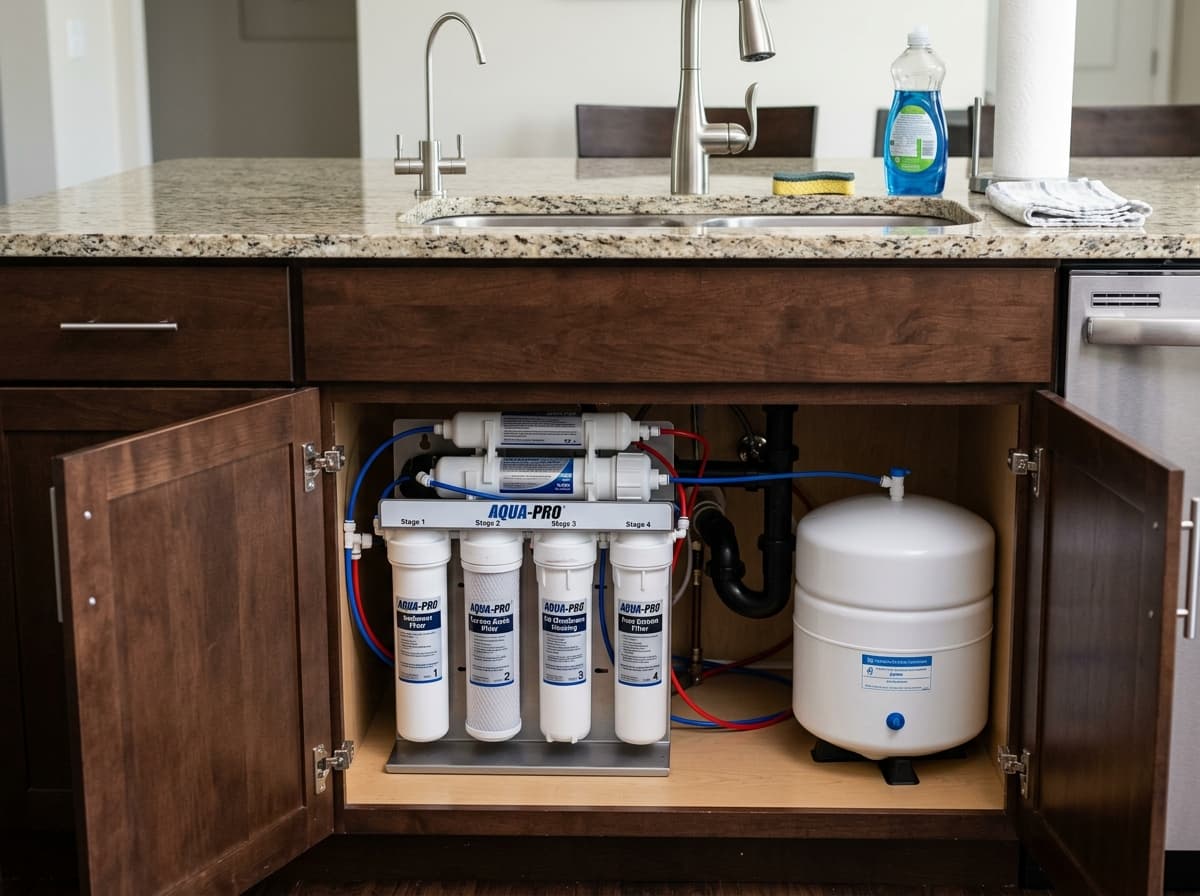
We install under-sink RO systems that connect to a dedicated faucet at your kitchen sink. The system treats water on demand and stores it in a small tank so you always have purified water ready. Most under-sink RO systems are compact enough to fit in any cabinet and require minimal maintenance. We can also connect the RO line to your refrigerator's water and ice maker — one of the most requested additions during installation.
Here's something worth knowing about RO in St. George specifically: the high TDS (total dissolved solids) in our water means RO membranes work harder here than in cities with softer water. Pre-treating with a water softener dramatically extends your RO membrane life because the softener removes the calcium and magnesium before they reach the membrane. Without pre-treatment, we've seen RO membranes in St. George homes need replacement in 12–18 months instead of the typical 2–4 years. Pairing the two systems saves money long-term and produces better water quality overall.
What RO Removes from Your Water
Reverse osmosis membranes remove dissolved solids (calcium, magnesium, sodium), heavy metals (lead, arsenic, chromium), nitrates, fluoride, chlorine and chloramines, and most pharmaceutical compounds. The result is water that's cleaner than virtually any municipal treatment achieves on its own.
- Removes 95–99% of contaminants
- Cleaner than most bottled water brands
- Eliminates need for single-use plastic bottles
- Compact under-sink installation
- Low ongoing maintenance cost
- Dedicated clean-water faucet
Service Details
Quick Info
Timeline
Half day
Warranty
1-year labor + manufacturer
Know the Warning Signs
Signs You Need Reverse Osmosis Systems
Catching these early prevents a small issue from becoming a costly emergency.
If you're spending $50–$100/month on bottled water, an RO system typically pays for itself within 1–2 years.
If you're uncertain about what's in your tap water, RO provides a level of purification that addresses virtually all common contaminants.
A slow or weak RO system usually needs a membrane replacement or pre-filter change — both routine maintenance items.
Local Expertise
How St. George's High TDS Water Affects Your Reverse Osmosis System
St. George's tap water typically measures 300–600 parts per million of total dissolved solids — a direct result of the Virgin River's journey through mineral-rich sandstone and limestone formations. That's 5–10 times higher than what residents in Pacific Northwest cities experience. For an RO system, higher TDS means the membrane is working harder on every gallon it processes. The membrane has to reject more dissolved material, which increases the concentration gradient across the membrane surface and accelerates fouling. This is why RO systems in St. George require more frequent maintenance than identical systems installed in cities with softer, lower-TDS water.
The calcium and magnesium in St. George's water are particularly problematic for RO membranes. These minerals form hard scale on the membrane surface, physically blocking the pores that purified water passes through. Once scale forms on an RO membrane, it can't simply be washed off — the membrane needs replacement. This is the number one reason we recommend installing a water softener upstream of any RO system in Southern Utah. The softener removes the calcium and magnesium before they ever reach the membrane, extending its life from 12–18 months (without softener) to 3–4 years (with softener). It's an upfront investment that saves significantly on membrane replacement costs over time.
We've also seen that St. George's seasonal water quality variations affect RO performance. During monsoon season and spring runoff, sediment levels in the municipal supply increase, which can clog RO pre-filters faster than normal. We account for this when setting up maintenance schedules for our customers — recommending more frequent pre-filter changes during high-sediment months and standard intervals during the rest of the year. Understanding these local patterns is part of properly maintaining an RO system in Southern Utah.
Transparent from Start to Finish
How Our Service Works
System Selection
We help you choose the right RO system for your household's drinking water demand and your cabinet space.
Under-Sink Installation
We mount the system, install the membrane and filters, run the dedicated faucet line, and connect to drain.
System Flush & Testing
New RO systems require an initial flush. We test the output water quality before completing the installation.
Maintenance Schedule
We explain filter replacement schedules (typically annual) and can handle maintenance for you.
Compare Your Options
Reverse Osmosis vs. Standard Carbon Filtration
Both improve water quality, but they use different technologies and remove different contaminants. Here's how they compare for St. George drinking water.
Our recommendation: For St. George homes where the goal is the cleanest, best-tasting drinking water, reverse osmosis is the clear choice — it handles the high TDS, heavy minerals, and contaminants that carbon filtration alone can't remove. A carbon filter is a solid budget option for improving taste and removing chlorine. For the best of both worlds, our recommended setup is a whole-house carbon filter for every tap plus an under-sink RO for drinking water.
The Marlin Difference
Why Southern Utah Trusts Marlin
Clean, Quick Installation
Our installers work neatly inside your cabinet, route lines professionally, and leave the space clean.
System Knowledge
We work with multiple RO brands and can recommend the right system for your water conditions and household demand.
Combined Treatment
For the best results in St. George, we often pair RO with a whole-house softener. We design the full treatment solution.
Ongoing Maintenance Support
We stock filter and membrane replacements and can schedule annual maintenance visits to keep your system performing.
Related Services
Customers who needed this service also needed these.
Got Questions?
Reverse Osmosis Systems FAQ
Practical answers based on the questions St. George homeowners ask most.
Absolutely. RO produces some of the purest drinking water available — it's the same technology used in medical facilities and pharmaceutical manufacturing. It removes contaminants while producing clean, safe water. Some people add a mineral remineralization stage for taste preference, but standard RO water is completely safe for daily use by everyone including children.
Reverse Osmosis Systems Across Southern Utah
Serving St. George and the surrounding Washington County communities since 1978.
Need Reverse Osmosis Systems?
Book online in a few clicks, or call for the current arrival window. Emergency calls are answered 24/7, with a clear estimate before work begins.
Family Owned & Operated • Since 1978 • Licensed & Insured • IAPMO Certified