
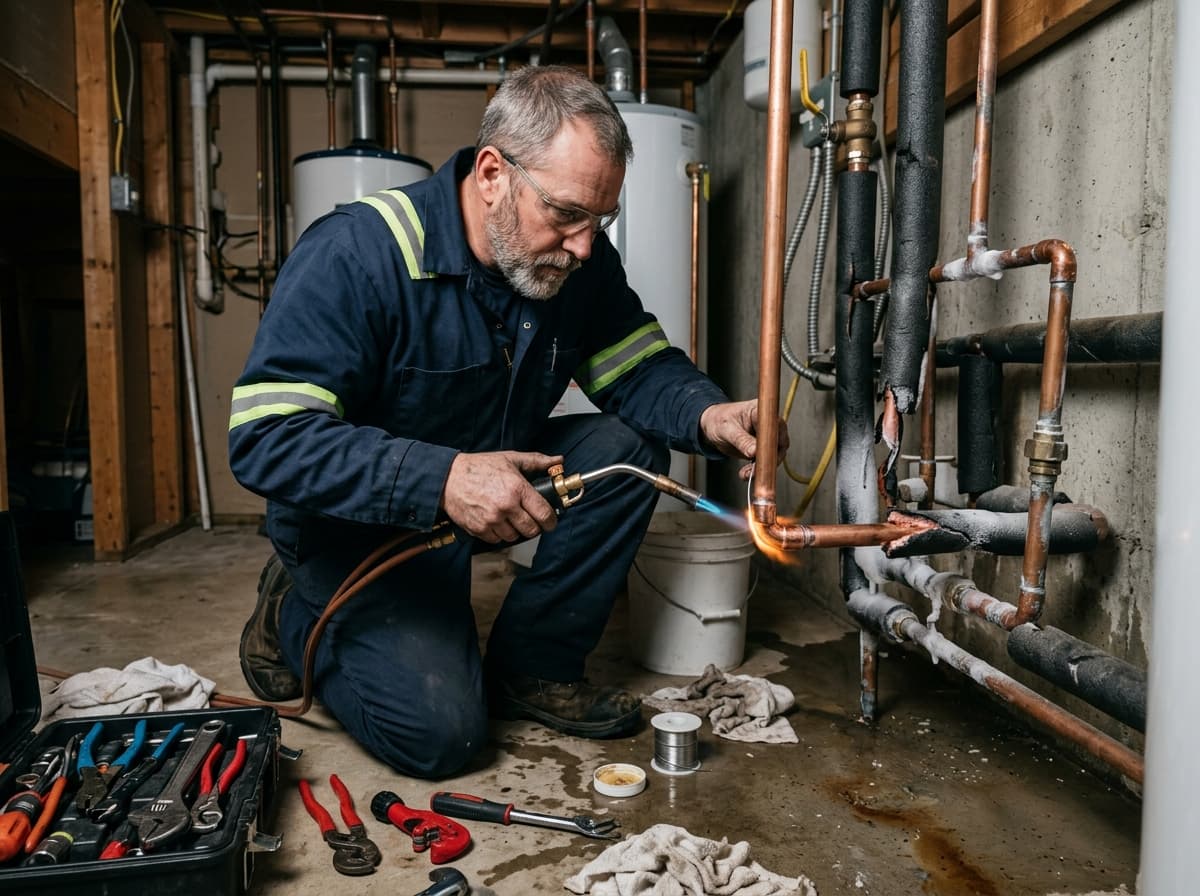
People assume the desert never freezes, but St. George nights hit the low 20s. Here's how to protect your pipes before a hard freeze — and what to do if one freezes anyway.
It's one of the most common misconceptions we hear in St. George: the desert never really freezes, so why worry about pipes? But anyone who's lived through a Southern Utah winter knows the truth — our nights regularly drop into the low 20s, and that's more than cold enough to freeze and burst a water line. The homes that get hit are almost always the ones whose owners assumed it couldn't happen here.
Why Desert Homes Are More Vulnerable, Not Less
In colder parts of the country, homes are built with freezing in mind — pipes run through insulated interior spaces and builders plan for hard winters. In our climate, that caution often isn't there, which means a lot of local homes have water lines running through spots that get dangerously cold on the worst nights.
The usual trouble spots are unheated garages, pipes inside exterior walls, lines running through crawlspaces, and outdoor hose bibs. Those are the places to focus on, because they're the first to freeze when the temperature drops.
Start With Your Outdoor Hose Bibs
Outdoor faucets are the number one place we see freeze damage, and they're also the easiest to protect. Before the first hard freeze, disconnect every garden hose and drain it. A hose left attached traps water in the faucet and the pipe behind it, and when that water freezes and expands, it can split the line inside your wall — where you won't see the damage until it thaws and floods.
Once your hoses are off, cover each exterior faucet with an inexpensive insulated hose-bib cover. They cost a few dollars and take a minute to install.
Insulate the Pipes You Can Reach
Any exposed pipe in an unheated space is a candidate for freezing. Foam pipe insulation sleeves from the hardware store slip right over the line and make a real difference on lines in the garage, the crawlspace, or against an exterior wall. Pay special attention to the pipe leading to your outdoor faucets and anything running through a space that isn't heated.
Let Faucets Drip on the Coldest Nights
On the nights when temperatures are expected to drop into the low 20s or below, let a faucet or two run at a slow drip. Moving water is far harder to freeze than still water, and even a trickle relieves the pressure that actually causes pipes to burst. Choose a faucet served by a vulnerable line — one on an exterior wall is ideal.
It's also worth opening the cabinet doors under sinks on exterior walls so your home's warm air can reach the pipes underneath. A small step, but on the coldest nights it helps.
Know Where Your Main Shutoff Is
This is the one piece of prep that turns a disaster into an inconvenience: know exactly where your main water shutoff valve is and how to close it, before you ever need to. If a pipe bursts, the difference between a few gallons and a flooded home is how fast you can shut off the water. Find the valve now, make sure it turns, and make sure everyone in the house knows where it is.
What to Do if a Pipe Freezes
If you turn on a faucet and only a trickle comes out on a cold morning, you likely have a frozen pipe. Leave the faucet open so water can flow as the ice melts, and gently warm the frozen section with a hair dryer or space heater — never an open flame. Work from the faucet end back toward the frozen spot.
The most dangerous moment isn't when a pipe freezes — it's when it thaws. Ice expands and can crack the pipe while it's still frozen, but the leak often doesn't show until the thaw releases the water. If you can't locate the frozen section, or you're worried the pipe has already split, shut off your main and call for help before it lets go.
When to Call Marlin
If you've got a frozen line you can't thaw, a pipe that's already burst, or water showing up where it shouldn't, don't wait — call us. Our burst and frozen pipe repair crews handle these calls throughout St. George and the surrounding towns, and fast action keeps a cracked pipe from turning into serious water damage. We also offer leak detection to track down hidden leaks inside walls and under floors, so a small drip doesn't quietly rot your home from the inside.
Southern Utah freezes catch a lot of people off guard. A little prep now, and our number saved in your phone, is the best protection your plumbing can have.

Marlin Plumbing Heating & Air
Serving St. George, Utah since 1978