
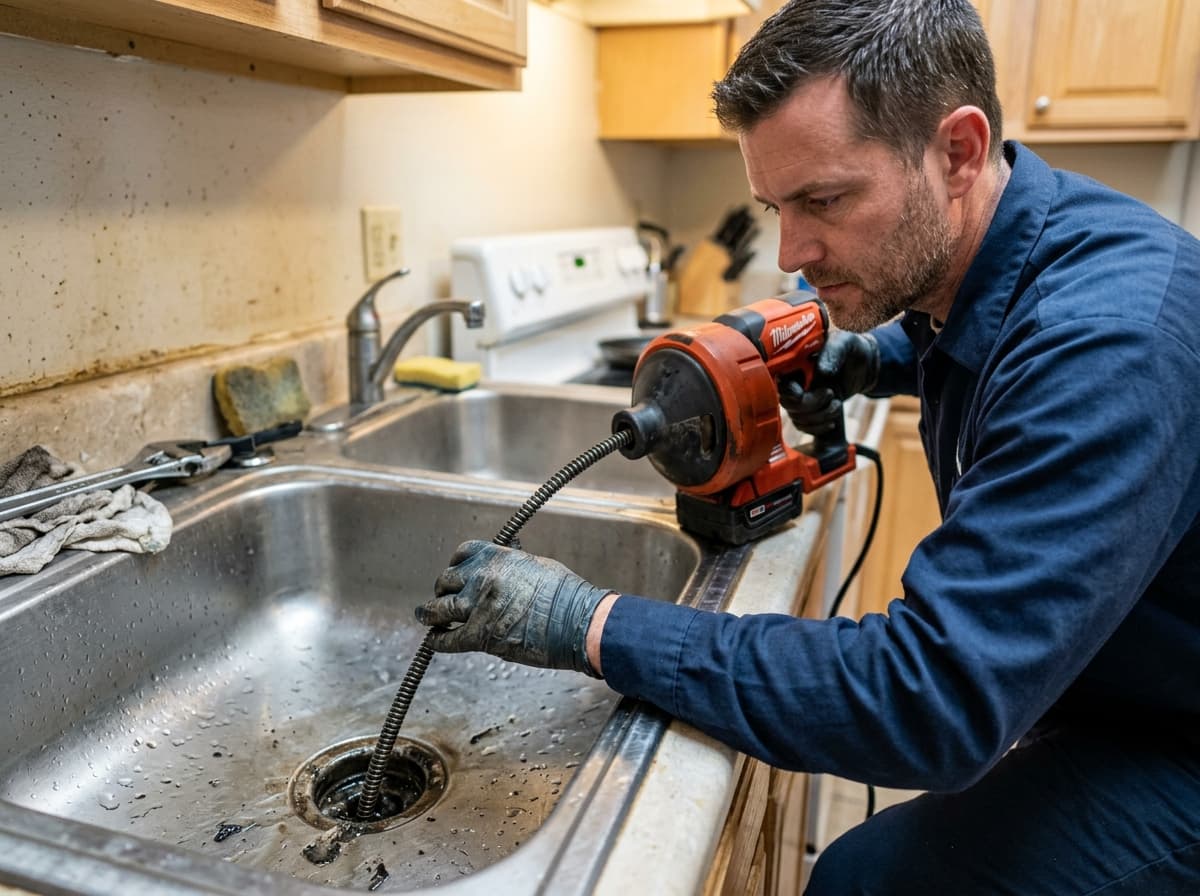
If the plunger keeps coming back out and the same drain clogs every few weeks, you don't have a clog problem — you have a pipe problem. Here's why older St. George homes clog again and again.
There's a big difference between a drain that clogs once and a drain that clogs over and over. A one-time clog is usually a wad of hair or a kid's toy. But when the same sink, tub, or main line backs up every few weeks no matter how many times you plunge or pour cleaner down it, something deeper is wrong with the pipe itself. In older St. George homes, that's a story we see all the time — and it almost never gets solved with another bottle of drain cleaner.
Recurring Clogs Are a Symptom, Not the Problem
A plunger and a store-bought cleaner deal with the blockage sitting right in front of you. They don't touch what's causing that blockage to keep forming in the same spot. If you clear a drain and it's slow again within a month, the pipe is telling you it has a chronic restriction somewhere downstream — a narrowed section, a rough interior, a belly in the line, or an intrusion that catches everything that flows past it.
That's why chasing recurring clogs with the same quick fix is a losing game. You're treating the symptom while the real cause sits untouched, and it usually gets worse over time, not better.
Decades of Hard-Water Scale Narrowing the Pipe
St. George has some of the hardest water in the country — 15-plus grains per gallon of dissolved calcium and magnesium. In an older home with aging galvanized steel pipes, decades of that mineral content leaves a hard scale on the inside walls of the drain lines. Little by little, the usable diameter of the pipe shrinks.
A drain that started life at two inches across can be choked down to a fraction of that after forty or fifty years. Once the opening is that tight, it doesn't take much to plug it — and it plugs again quickly because the pipe simply doesn't have the room it used to.
Grease and Soap Scum Cling to Rough, Aging Interiors
The inside of an old galvanized or cast-iron pipe isn't smooth anymore. Corrosion and scale give it a rough, pitted surface, and that texture grabs everything that flows past. Grease, cooking fats, soap scum, and hair snag on those rough spots and build up layer by layer.
In a newer home with smooth PVC, most of that material washes straight through. In an older St. George home, it sticks — which is exactly why the same kitchen or bathroom drain becomes a repeat offender while the rest of the house drains fine.
Tree Roots in the Sewer Lateral
If it's your main line backing up rather than a single fixture, roots are a prime suspect in older neighborhoods. The sewer lateral running from your house to the city main is often the original clay or older pipe, and its joints leak just enough moisture to attract tree and shrub roots. Roots work into the joints, spread into a mat inside the pipe, and catch everything that comes down the line.
You can clear them and get relief for a few months, but they grow back. Recurring whole-house backups — especially ones that gurgle in the lowest drains or the floor drain — are a classic sign of roots in the lateral.
Stop Guessing — Put a Camera in the Line
When a plunger keeps failing and the same drain won't stay clear, it's time to stop guessing and actually see what's going on. A sewer camera inspection runs a waterproof camera through the pipe so we can find the real cause — scale buildup, a grease-packed section, a bellied run of pipe holding water, a crack, or a root intrusion — and pinpoint exactly where it sits.
That single step changes everything, because now the repair matches the actual problem instead of taking another blind swing at it.
Camera Inspection vs. Repeat Snaking
A cable snake punches a hole through a clog. That's great for a one-off blockage, but for a pipe caked in years of scale, grease, and roots, a snake just pokes an opening that fills right back in. That's often why a snaked drain is slow again a few weeks later.
For chronic clogs, a camera inspection shows whether buildup, roots, a belly, or damaged pipe is causing the repeat blockage. That diagnosis lets the technician choose the right mechanical cleaning or repair instead of taking another blind pass with a snake.
When to Call Marlin
If you're plunging the same drain for the third time this year, don't buy another bottle of cleaner — let one of our techs run a professional drain cleaning and a sewer camera inspection so you finally know what's actually happening inside your pipes. We'll show you the real cause on camera and tell you honestly whether professional drain cleaning can solve it or whether an aging section of line needs to be repaired or replaced.
St. George's hard water and older housing stock are hard on drain lines. Diagnosing the true cause once beats fighting the same clog every month — and it's the smartest way to protect your home from a backup at the worst possible time.

Marlin Plumbing Heating & Air
Serving St. George, Utah since 1978