
A slab leak hides under your foundation, quietly running up your water bill and threatening your home's structure. Here are the warning signs Southern Utah homeowners should never brush off.
A slab leak is one of the sneakier plumbing problems a homeowner can face, because it happens where you can't see it — in the water lines running through or beneath the concrete slab your house sits on. By the time most people realize something is wrong, the leak has been running for weeks. In Southern Utah, the combination of shifting soil and hard water makes these leaks more common than a lot of homeowners expect, so it pays to know the warning signs.
Why Slab Leaks Are a Real Problem Here
Two things about our region gang up on the water lines under your slab. First, the expansive desert soil around St. George shifts as it takes on and gives up moisture, and that constant movement puts stress on rigid copper pipes until a joint or a run finally fails. Second, our famously hard water — some of the hardest in the country — corrodes copper from the inside over the years, thinning the walls until a pinhole opens up.
Put those together and you have a recipe for leaks in exactly the place they're hardest to find. It's not a sign you did anything wrong; it's a byproduct of the ground we build on and the water we run through our pipes.
A Warm Spot on the Floor
One of the most telling signs is a patch of floor that feels warm underfoot for no reason. If the leak is on the hot water line — which is common, since hot water accelerates corrosion — heated water pooling under the slab will warm the concrete above it. You'll notice it most on tile or laminate, often in a spot that has no business being warm.
If you find yourself steering around a warm area on the floor, don't dismiss it. That's often the first clue a slab leak leaves.
An Unexplained Spike in Your Water Bill
A slab leak runs 24 hours a day, and that shows up on your utility bill long before you see any water. If your usage jumps and nothing about your household has changed — no new landscaping, no house guests, no filling a pool — a hidden leak is one of the first things to suspect.
It helps to know your normal. When a bill lands that's noticeably higher than the same month last year and you can't account for it, treat that as a signal worth investigating rather than a fluke.
The Sound of Running Water With Everything Off
Turn off every fixture and appliance in the house, then stand still and listen. If you can hear water moving — a faint hiss or trickle in the walls or floor — water is going somewhere it shouldn't. On a quiet evening it can be surprisingly easy to pick out.
The same goes for a water meter that keeps ticking after you've shut everything down. A meter that won't sit still with the house quiet is one of the clearest signs of a hidden leak.
Dropping Pressure, Cracks, and a Mildew Smell
A few more signs tend to travel together. Water pressure that's gradually fallen off across the whole house can mean water is escaping before it reaches your taps. New cracks in the floor or in the walls can appear as water undermines and shifts the slab. And a persistent musty or mildew smell — especially near the floor or in a particular room — often points to moisture collecting where you can't see it, feeding mold under flooring or behind baseboards.
Any one of these on its own might be something minor. Two or three of them together strongly suggest a slab leak that needs a professional's eyes.
Finding the Leak Without Tearing Up Your Home
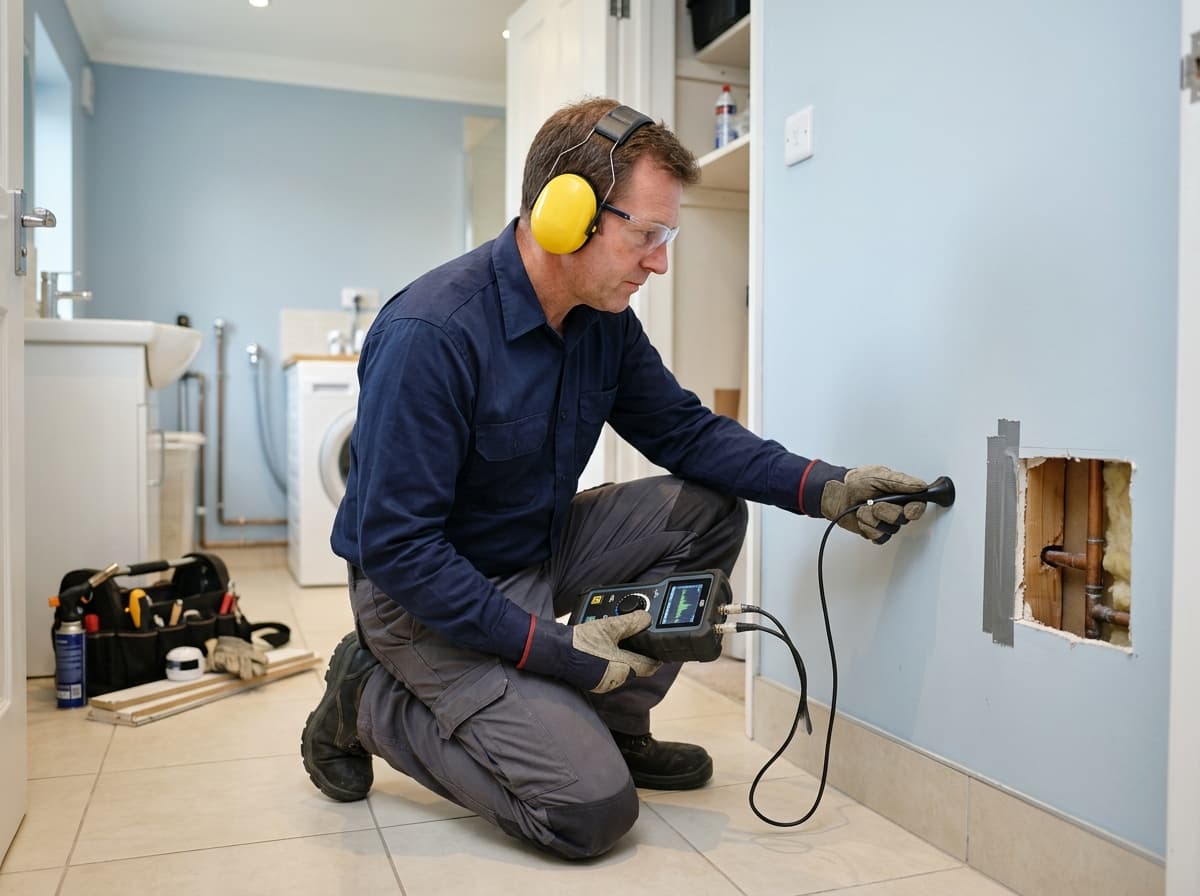
The old fear with slab leaks was that finding one meant jackhammering the floor on a guess. That's not how it works anymore. We use non-invasive electronic detection — acoustic listening equipment and pressure testing — to pinpoint the leak's location before any concrete is touched. That means we open up only the small area we actually need to, instead of chasing the problem blind.
Accurate location is everything. It keeps the repair targeted, the cost down, and the disruption to your home to a minimum.
When to Call Marlin
If you're seeing any of these warning signs, the smartest move is to act quickly. A slab leak doesn't heal itself — it keeps running, keeps wasting water, and over time can undermine the foundation your home depends on. Our team offers professional leak detection to locate the problem precisely, then handles the water main or water line repair to fix it right.
Catching a slab leak early is the difference between a contained repair and foundation damage that costs far more to put right. If something on this list sounds familiar, give us a call and let one of our techs take a look before it gets worse.

Marlin Plumbing Heating & Air
Serving St. George, Utah since 1978