
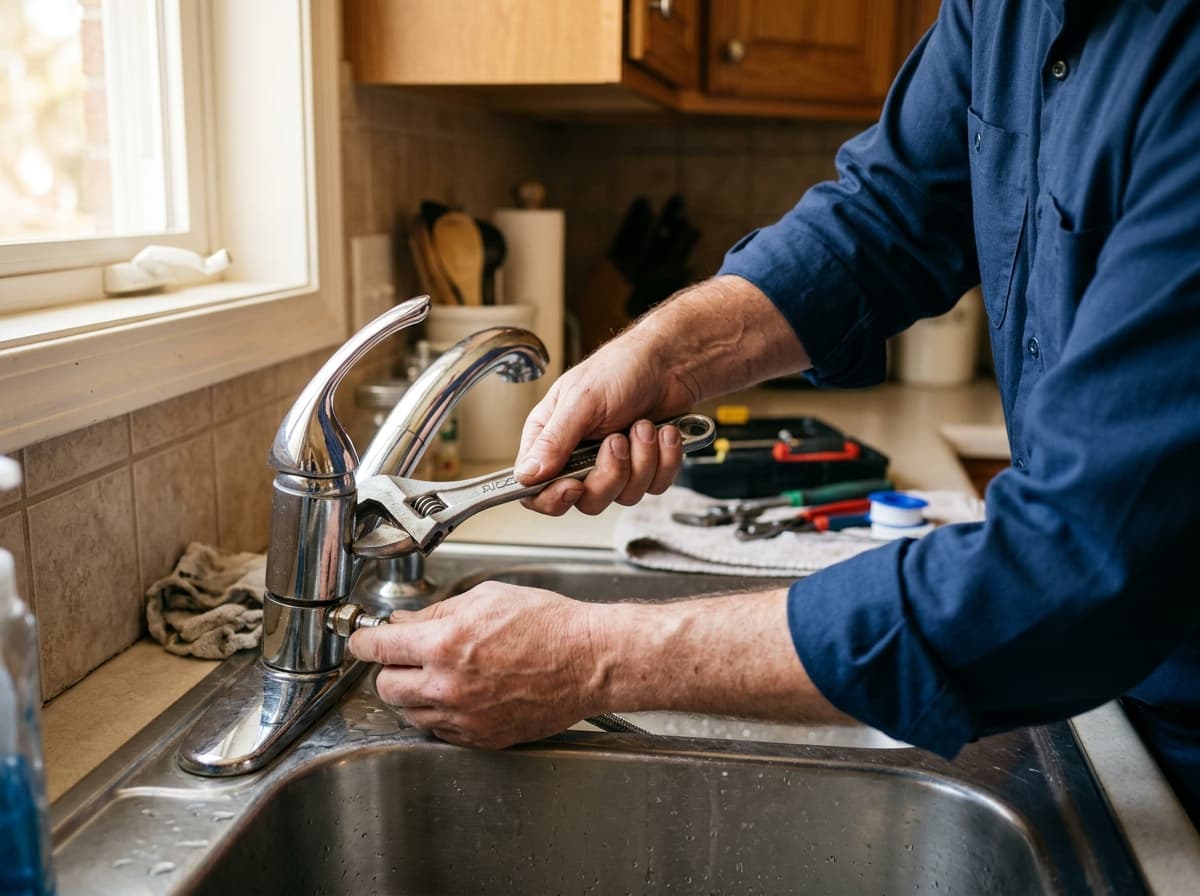
Winter is hard on plumbing, even in the desert. Walk through this spring checklist to catch freeze damage, flush out hard-water sediment, and get your home ready for the demands of summer.
Spring is the natural time to walk through your home's plumbing and see how it came through the winter. Southern Utah's cold desert nights can freeze exposed lines and hose bibs, and our hard water never stops depositing sediment where you can't see it. A short, deliberate walkthrough now will catch small problems before irrigation season and the summer heat put your whole system under load. Here's a practical checklist to work through.
1. Test Outdoor Spigots and Hose Bibs
Start outside. Our winter nights get cold enough to freeze and crack an exposed spigot or hose bib, and the damage often hides until you turn the water on. Run each outdoor faucet and, while it's flowing, put your thumb over the opening. If you can stop the flow completely, there's a good chance the line behind it has split and is leaking inside the wall.
Catch this before irrigation season and you avoid watering the inside of your wall every time you hook up a hose.
2. Flush Your Water Heater
This is the big one for our area. St. George's hard water drops calcium and magnesium sediment to the bottom of your water heater tank, where it insulates the burner, steals efficiency, and shortens the unit's life. Draining and flushing the tank clears that buildup out.
If you've never flushed yours and it's a few years old, or if you hear popping and rumbling when it heats, don't force it — a stuck drain valve on a neglected tank can turn a simple flush into a mess. That's a good one to hand to a pro.
3. Check Under Sinks and Around Toilets
Open the cabinets under every sink and run your hand along the supply lines, the trap, and the cabinet floor. You're feeling for dampness, looking for water stains or corrosion, and checking for that musty smell that means a slow leak has been going a while. Then check around the base of each toilet for any water, softness in the floor, or rocking when you shift your weight.
Slow leaks waste water quietly for months. Five minutes with a flashlight catches them before they rot a cabinet or subfloor.
4. Clear Slow Drains
Take note of any sink, tub, or shower that's draining slower than it used to. A slow drain is an early warning that a clog is building, and it's far easier to deal with now than when it backs up completely. Hot water and a good plunger handle some of it; a stubborn or recurring slow drain usually means buildup deeper in the line.
If the same drain keeps slowing down no matter what you do, the clog is beyond the reach of home remedies and it's time for a professional cleaning.
5. Test Your Water Pressure
Pressure that's too low is annoying; pressure that's too high quietly wears out your fixtures, appliances, and pipe joints. You can check it with an inexpensive gauge that threads onto an outdoor spigot. Most homes should sit somewhere in the range of 40 to 60 psi.
If your reading is well above that, a failing or missing pressure regulator could be putting your whole system under more strain than it should carry — worth having looked at before it causes a leak.
6. Top Off the Water Softener Salt
If you run a water softener — and in this region you almost certainly should — spring is a good time to check the brine tank and top off the salt. A softener that's run dry stops protecting your home, and suddenly all that hardness is flowing straight to your water heater, fixtures, and appliances again.
While you're at it, look for a hard salt crust or bridge in the tank that can keep the softener from regenerating properly, and break it up if you find one.
7. Prep for Summer Irrigation Demand
Before you fire up the sprinklers for the season, walk the yard with the system running. Look for broken or misaligned heads, check for soggy low spots that hint at an underground line leak, and make sure the backflow preventer is intact after the winter. Our summers put heavy, sustained demand on irrigation, and small problems only get more expensive once you're running the system daily in the heat.
Getting the irrigation system checked out now means clean, efficient watering all summer instead of surprise repairs in July.
When to Call Marlin
Plenty of this checklist is homeowner-friendly, but anything that turns up a leak, a stubborn drain, a failed regulator, or a water heater that needs more than a simple flush is worth a professional's hands. Our residential plumbing service can handle the repairs this walkthrough uncovers, and our drain cleaning gets the lines that keep slowing down flowing right again.
We've been keeping Southern Utah homes running since 1978. If your spring check turns up something you'd rather not tackle yourself, give us a call and we'll take care of it before summer.

Marlin Plumbing Heating & Air
Serving St. George, Utah since 1978