
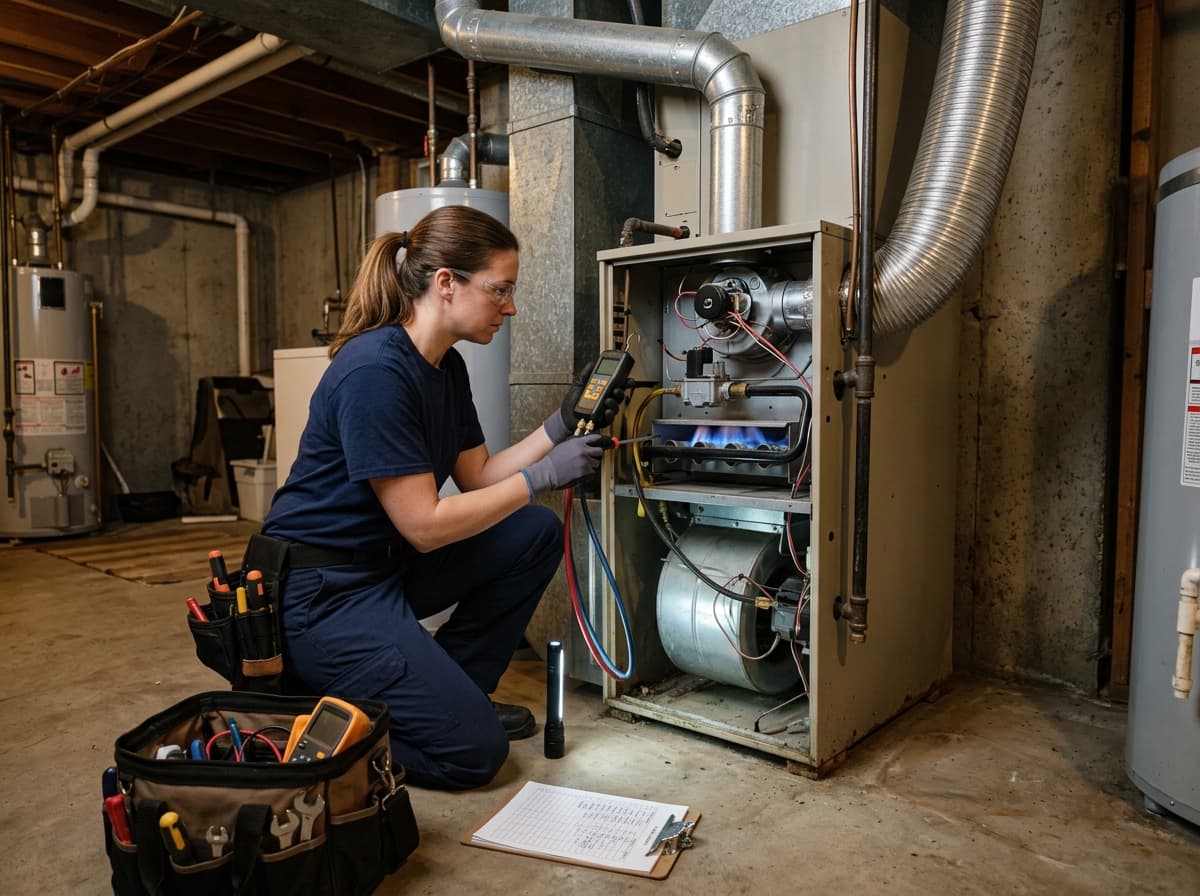
Your furnace has sat idle since spring under a summer of desert dust. Here's what a real fall tune-up checks, what you can safely do yourself, and when a startup smell means trouble.
Your furnace shut off sometime in March and hasn't done a thing since. Meanwhile the air conditioner has run almost nonstop through a St. George summer, breathing fine red desert dust the entire time. That dust doesn't stop at the filter. It settles on the blower, the burners, and the sensors while the heating side sits idle. Fall is when that comes back to matter, and a tune-up before the first cold night is the difference between a furnace that starts and one you find out about the hard way.
Why the First Cold Night Is the Worst Time to Find Out
Southern Utah eases into fall. You get weeks of perfect weather, the AC finally gets a rest, and then one night in October the temperature drops and you reach for the thermostat for the first time since spring. That's when most furnace problems announce themselves, because it's the first time the system has been asked to do anything.
It's also the worst possible moment. Everyone else in town is flipping their heat on the same week, so schedules fill up fast. The furnace may have been developing a problem for months with nobody noticing. And now you're troubleshooting in the cold instead of on a mild September afternoon. Getting the system checked before you need it turns an emergency into an appointment.
Burners, Ignition, and the Heat Exchanger
A real tune-up is a working inspection, not a glance and a sticker. It starts where the heat is made. The technician cleans and inspects the burners, because dust on a burner causes lazy, uneven flames and delayed ignition, the source of that whump some furnaces make when they light. They check the igniter and the flame sensor that tells the furnace the burners actually lit. A dirty flame sensor is one of the most common reasons a furnace starts, runs a few seconds, and shuts back down.
Then comes the heat exchanger, the part that matters most for your family's safety. It's the metal wall that separates the burning gas from the air you breathe. Your home's air passes over the outside and picks up heat; combustion gases stay inside and go out the flue. If that metal develops a crack or a rust hole, the two air streams can mix, and carbon monoxide can end up in your ductwork. Cracks are hard to see and impossible to notice from the living room, which is why a trained eye checks every year.
Safety Controls, Blower, Filter, and Thermostat
Your furnace has built-in safeties that shut it down before a problem turns dangerous: limit switches that trip if the unit overheats, a pressure switch that confirms the vent is drawing properly, and rollout switches that catch flames going where they shouldn't. The technician tests each one. A furnace that runs fine but has a failed safety is a furnace with no backstop.
Next is the blower, the same motor that just carried you through summer. After months of pulling dusty air, the wheel can be caked, the motor may be straining, and on older belt-driven units the belt may be worn or loose. A clean, properly tensioned blower moves more air with less effort, and it's quieter. The filter gets replaced if you haven't done it already, and the thermostat is checked to confirm it calls for heat correctly, reads the room accurately, and switches over from cooling without a hiccup.
Venting, Gas Connections, and Condensate
Whatever your furnace burns has to leave the house. The technician inspects the flue and vent for blockages, corrosion, disconnected joints, and proper slope, and confirms exhaust is going outside. Birds, wasps, and wind-blown debris have a way of finding vent terminations over a long summer.
They also check the gas connections and the gas valve for leaks and proper operation. This is technician work, full stop. It takes test equipment and training, and it's one of several reasons the inside of the cabinet isn't a homeowner project.
If you have a high-efficiency furnace, the kind with plastic vent pipes instead of a metal flue, it produces water as it runs. That condensate drains through a trap and a line that can clog with sediment or algae over a hot, idle summer. A blocked condensate line shuts the furnace down, so clearing and testing it is part of the visit.
What You Can Safely Do Before the Visit
There's plenty you can do to get ready, and none of it involves opening the furnace.
Replace the filter. After a St. George summer it's almost certainly loaded. A fresh filter protects the blower and makes the technician's airflow readings meaningful.
Clear the area around the unit. Furnace closets and garage corners collect boxes and holiday storage over the year. Give the cabinet room to breathe and someone room to work.
Test the thermostat. Switch it to heat, set it a few degrees above the room, and see whether the system responds. If nothing happens, or it starts and stops, write that down.
Open every vent and return. Closed registers and furniture pushed against returns choke airflow. Walk the house and make sure air can move.
Remember last season. Any burning smells, rattling, squealing, short cycling, or rooms that never warmed up. The technician can't reproduce what happened in February, but a good description points them straight at it.
That Burning-Dust Smell on First Startup
The first time your furnace fires each fall, you'll probably smell hot dust. That's usually what it is. A summer's worth of desert dust settled on the heat exchanger and burners, and the first heat cycle burns it off. It's normal, it should fade after the first cycle or two, and cracking a window is all you need to do.
What isn't normal is a smell that lingers into the next day, gets stronger with each cycle, or smells like something other than dust. An electrical or hot-plastic smell, a rotten-egg smell, or anything that makes your eyes sting means you turn the system off at the thermostat, get everyone out of the house if there's any hint of gas, and make the call. Don't wait to see if it clears. Your nose is one of the best diagnostic tools you own.
Why Annual Service Matters More in the Desert
Furnace advice written for a wet, green climate doesn't quite fit here. Our dust is finer, there's more of it, and it's airborne more of the year. It gets past filters, packs into blower wheels, coats flame sensors, and settles on burners. A furnace here simply gets dirtier between seasons than the same furnace would somewhere with real rainfall and lawns.
Add the way our systems work, blower running hard all summer and then switching straight to heating, and the wear adds up. An annual fall tune-up catches that buildup before it becomes a no-heat call, keeps the safety side honest, and gives you a heating season you don't have to think about. It won't make a furnace immortal, and nobody honest will tell you it prevents every failure. It stacks the odds in your favor on the nights that count.
When to Call Marlin
If your furnace hasn't been looked at since last fall, or ever, now is the window. Marlin provides furnace maintenance across St. George and the surrounding Southern Utah communities, with a tune-up that covers everything above and a technician who tells you plainly what they found. If the inspection turns up a problem, we handle furnace repair, and we're here for emergency furnace repair when a system quits on a cold night.
We've been keeping Southern Utah homes comfortable since 1978. Get on the schedule before the first cold snap, not after it.

Marlin Plumbing Heating & Air
Serving St. George, Utah since 1978