
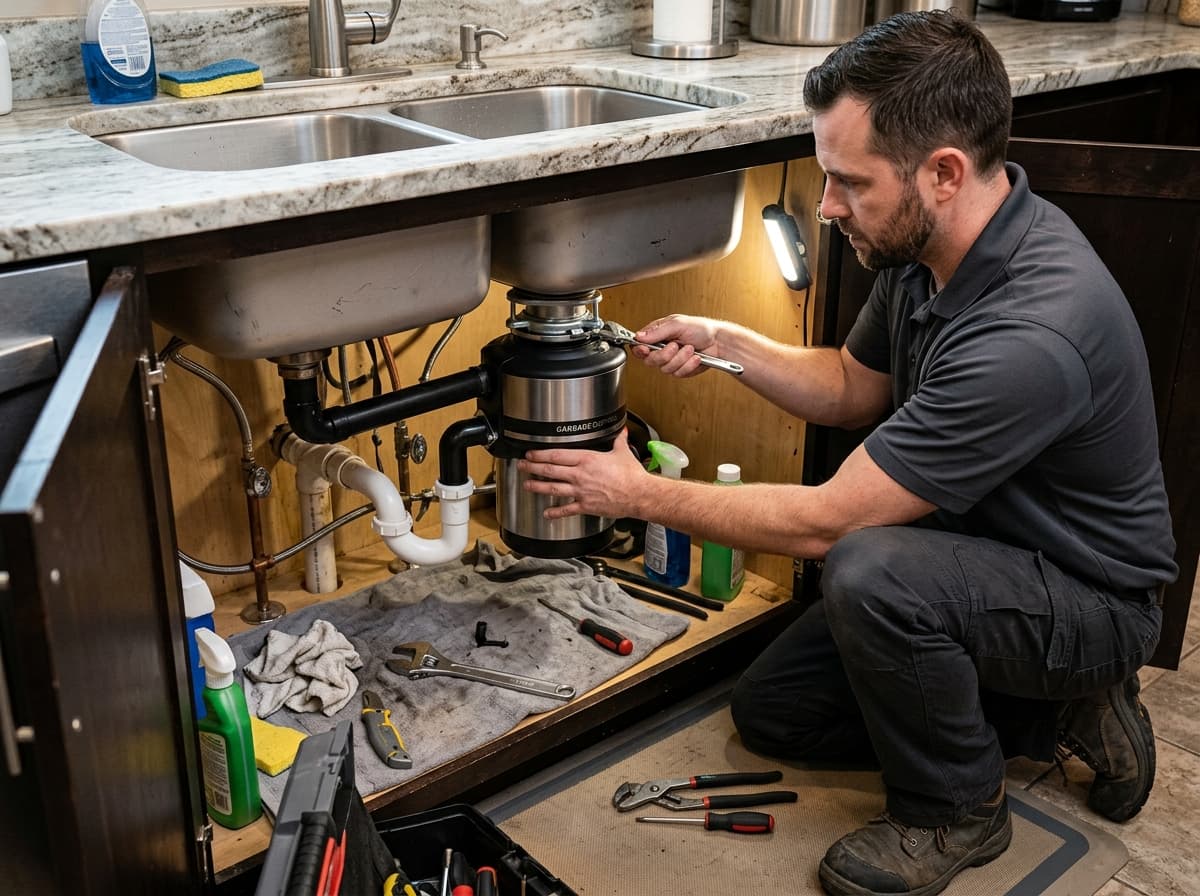
The disposal is the most abused appliance in a busy kitchen. Here's what it's actually built to handle, what jams it, and how to tell when it's time to replace it.
Ask any plumber in St. George which kitchen appliance takes the most punishment and you'll get the same answer: the garbage disposal. It gets fed whatever is left on the plate and is expected to grind through all of it without complaint. It usually does, right up until the night before a big family dinner, when it hums, trips, or backs up the sink. We fix disposals every week, and most of those calls trace back to the same handful of habits. Here's what the thing is actually built for, what it isn't, and how to keep yours out of trouble.
What a Disposal Is Actually Built For
A garbage disposal is not a trash can with a motor. It's designed for small amounts of soft food scraps — the bits you rinse off a plate, not a pan of leftovers — with plenty of cold water carrying them down the drain. Inside the chamber, a spinning plate with blunt lugs flings food against a grind ring until it's fine enough to wash through. Nothing in there is sharp. It grinds by force and speed, which is exactly why fibrous, hard, or sticky material gives it so much trouble.
The realistic job description: rinse scraps, a little at a time, with the water running. Scrape the bulk of what's on the plate into the trash first. Do that and a disposal will grind happily for years. Treat it like a second garbage can and you'll be hunting for the reset button before long.
The Short List That Causes Most Service Calls
Grease, fat, and cooking oil top the list. They go down as a warm liquid, cool inside the drain line, and harden into a coating that catches everything that follows. Chasing it with hot water only moves the problem further down the pipe. Let grease cool in a can and throw it in the trash.
Fibrous vegetables are next. Celery, corn husks, asparagus, onion skins, and artichoke leaves shred into long strands that wrap around the lugs and bind the plate. Starchy foods — potato peels, rice, pasta, bread, oatmeal — do something different: they swell with water and turn into a paste that clogs the trap and the line behind it. Coffee grounds and eggshells pass through fine but settle in the trap as a sludge, and eggshell membranes are stringy enough to tangle. Bones, fruit pits, and seafood shells are simply too hard for the mechanism; they rattle around, chip the grind ring, and eventually seize it.
Then there's everything that isn't food at all: twist ties, bottle caps, rubber bands, produce stickers, and the occasional ring. These don't grind, they jam, and getting one out is a job for someone who knows how to do it safely.
How to Run It the Right Way
Cold water is the whole trick. Turn it on before you flip the switch, keep it running while the disposal grinds, and let it keep running after the grinding smooths out so the scraps get carried through the trap and into the main line. Cold water keeps any grease that does get in there solid and in small pieces, so it flushes through instead of coating the pipe. Hot water does the opposite.
Feed scraps in gradually rather than packing the chamber and then hitting the switch. A full chamber overloads the motor, and an overloaded motor is what trips the thermal overload and shuts the unit down. Run it every couple of days even when there's little to grind, because what's in there hardens when it sits. And here in Southern Utah, where the water is about as hard as it gets, mineral scale builds up on the grind ring and drain line just like it does on your showerhead, so running plenty of water matters even more.
When It Hums, Jams, or Won't Turn On
A disposal that hums but doesn't spin is jammed. The motor is trying to turn and something is holding the plate. Switch it off right away. A humming motor that can't turn overheats fast and trips its own overload, and running it that way over and over shortens its life. Never put your hand or fingers in the chamber, even with the switch off, and don't go fishing with tongs or pliers either.
If it's completely silent when you flip the switch, the thermal overload has probably tripped. Look at the bottom of the unit for the small reset button, usually red, and press it once. If the motor felt warm, wait a few minutes first. Then try the switch again with the cold water running. If it hums again immediately, something is still in there, and that's the moment to stop and call. It's also worth checking that the plug under the sink hasn't worked loose after someone was rooting around for cleaning supplies.
Whatever you do, keep chemical drain cleaners out of it. They don't clear a jam. They sit in the chamber eating at the seals, and they turn a routine service call into a hazardous one for whoever has to open the unit up.
Smells, and How to Keep It Fresh
Odor almost always comes from food that never made it through: a film on the underside of the rubber splash guard, buildup on the walls of the chamber, or scraps sitting in the trap. The real fix is the habits above: enough cold water, a little at a time, running it regularly.
For a freshening routine, run a handful of ice cubes through with cold water. The ice scours the chamber and knocks loose buildup. Follow it with citrus peels, which leave the drain smelling clean, and a squirt of dish soap to cut any grease film. The underside of the splash guard collects more grime than anything else down there, and a long-handled brush with the switch off takes care of it from above. If a smell comes back within a day or two no matter what you do, something is stuck deeper in the line, and that's a drain problem, not a disposal problem.
Repair or Replace?
Disposals wear out. If you're pressing the reset button every few weeks, the motor is telling you it's tired, and a jam that keeps coming back with normal use points the same direction. Water on the cabinet floor means a leak, and where it's coming from matters. A drip at the sink flange or the drain connection is usually a repair. Water weeping from the body of the disposal itself means the internal seal has failed, and that unit is done. Rust flaking off the underside, or a chamber that looks corroded when you shine a flashlight down the drain, tells the same story.
Age counts too. A disposal that's been in service a long time and grinds slower and louder than it used to will generally cost more in nuisance calls than a new one. Newer units are quieter, grind finer, and forgive the occasional mistake better. If you're already dealing with one of the failures above, replacing is usually the smarter call than patching.
When to Call Marlin
If your disposal is humming, tripping its reset over and over, leaking underneath, or just refusing to keep up with a busy kitchen, we'll sort it out. Marlin handles garbage disposal repair and installation, drain services for the line behind it when a clog has moved past the trap, and kitchen plumbing from the faucet to the wall.
We've been keeping Southern Utah kitchens running since 1978, and we've seen every mistake on this list more times than we can count. Skip the chemicals and the guesswork. Give us a call and we'll get your sink draining the way it should.

Marlin Plumbing Heating & Air
Serving St. George, Utah since 1978